
Proper commercial deep fryer cleaning protects food quality, extends equipment life, and reduces safety risks in busy kitchens. In this guide, we’ll cover the complete cleaning process — from daily maintenance to deep boil-outs — along with the tools, safety protocols, and schedules that keep fryers operating at peak performance.
1. Why Cleaning a Commercial Deep Fryer Is Essential
Cleaning a commercial deep fryer is essential for food quality, kitchen safety, and equipment longevity. With roughly 33,300 cooking fires occurring annually in nonresidential buildings, proper maintenance helps prevent dangerous incidents. Additionally, an estimated 1 in 6 people get sick from contaminated foods each year, making clean equipment critical for protecting customers and your business reputation. Leftover food particles and degraded cooking oil also create off-flavors that compromise menu quality.
2. Tools and Supplies Needed to Clean a Fryer
Gathering the right tools ensures fryer cleaning is both safe and effective. Having everything prepared ahead of time minimizes delays and reduces risks.
- Protective Gear: Heat-resistant gloves, safety goggles, and waterproof aprons to protect against burns and chemical exposure.
- Commercial Degreaser: A non-caustic, food-safe cleaner designed for commercial fryers that removes grease without damaging stainless steel.
- Scrubbing Tools: Long-handled brushes and non-abrasive scrapers to remove buildup safely.
- Heat-Resistant Container: A dedicated container or caddy for safely transporting used cooking oil.
3. Step-by-Step Guide to Cleaning a Commercial Deep Fryer
Following a consistent process ensures a thorough cleaning while keeping staff safe and equipment service-ready.
- Step 1 — Power Down & Cool: Turn off and unplug the fryer, then allow the oil to cool to a safe temperature. Before draining, confirm the fryer’s oil capacity, as larger units require appropriate containers and handling precautions.
- Step 2 — Remove Debris & Clean: Scrape large food particles from fryer walls and the vat. Apply a commercial cleaner according to manufacturer instructions and scrub all interior surfaces with a long-handled brush.
- Step 3 — Rinse & Dry: Rinse the fryer thoroughly with hot water to remove all cleaning solution. Dry completely — residual moisture can cause dangerous splattering when fresh oil is added.
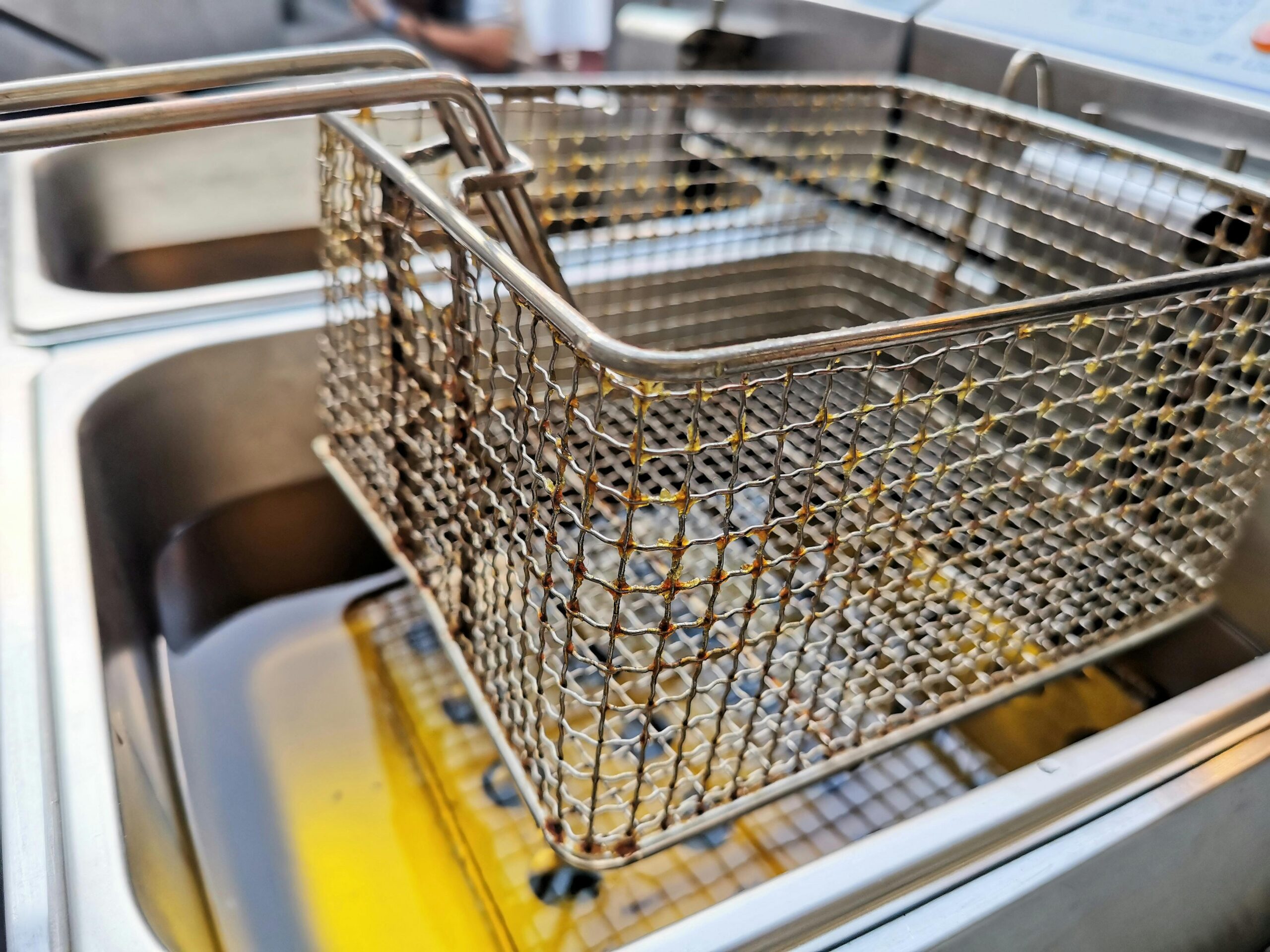
- Basket & Component Cleaning: Remove fryer baskets, hangers, and guards and clean them separately to prevent carbon buildup and premature oil degradation.
4. How to Perform a Proper Fryer Boil-Out
A fryer boil-out is a deep-cleaning process used to remove carbonized grease that standard cleaning can’t eliminate.
- Fill & Add Solution: Fill the fryer with water and add a specialized boil-out solution following product instructions.
- Simmer: Bring the solution to a gentle boil and simmer for 20–30 minutes to break down stubborn residue.
- Drain & Rinse: Turn off the fryer, drain the solution carefully, rinse thoroughly, and dry completely before refilling with oil.
5. Safety Precautions When Cleaning a Fryer
Proper safety protocols reduce the risk of burns, slips, and chemical exposure during fryer cleaning.
- Temperature Control: Ensure oil and equipment are cool enough to handle safely.
- Personal Protective Equipment: Always wear heat-resistant gloves, goggles, and aprons.
- Water Safety: Never introduce water into hot oil — it can cause violent eruptions.
- Chemical Handling: Use only fryer-approved cleaners and never mix chemicals.

6. How Often a Commercial Fryer Should Be Cleaned
Cleaning frequency depends on kitchen volume and the foods you prepare. A structured schedule supports food quality, oil life, and consistent fryer performance.
| Frequency | Task | Purpose |
|---|---|---|
| Daily | Skim debris from cooking oil and wipe down exterior | Prevents particle buildup and maintains appearance |
| Weekly | Perform full deep clean | Removes grease and ensures optimal operation |
| Monthly | Conduct complete boil-out | Eliminates tough, carbonized residue |
Consistent cleaning also supports better oil management, helping operators determine when to change oil based on food volume, oil quality, and daily maintenance habits.
7. Common Fryer Cleaning Mistakes to Avoid
Avoiding common mistakes ensures safe cleaning without damaging equipment or compromising food quality.
- Using Abrasive Tools: Steel wool and harsh scrapers scratch surfaces and harbor bacteria.
- Skipping Daily Filtration: Failing to filter oil daily accelerates breakdown and increases cleaning difficulty.
- Inadequate Rinsing: Residual cleaning solution contaminates fresh oil.
- Mixing Chemicals: Mixing cleaners can create toxic fumes or dangerous reactions.
8. How RTI Automates Fryer Cleaning and Oil Handling
Manually handling cooking oil is one of the most hazardous kitchen tasks. Restaurant Technologies’ Automated Cooking Oil Management system eliminates manual oil transport by automating fresh oil delivery and used oil disposal.
- Hands-Free Oil Handling: Reduces burns, slips, and spills.
- Improved Efficiency: Frees staff to focus on food preparation and service while keeping fryers cleaner.
Conclusion
A disciplined fryer-cleaning routine improves food quality, enhances safety, and extends equipment life. By following a structured schedule and leveraging automation where possible, operators can transform fryer maintenance into a safer, simpler, and more efficient process that benefits staff, customers, and the bottom line.