
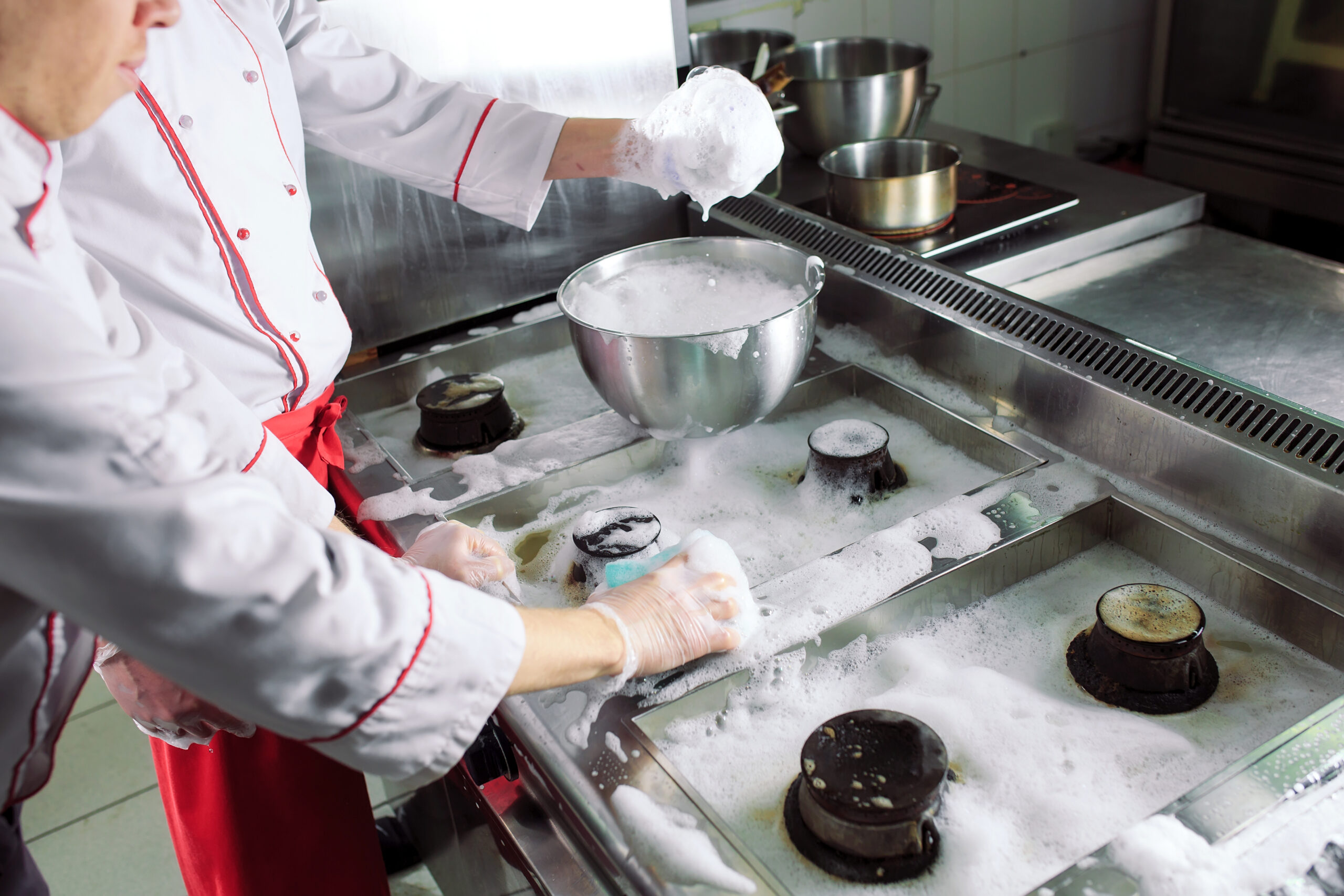
Why Hotel Kitchen Cleaning Is Critical
In a hotel kitchen, cleanliness is more than a visual standard. It is a safety requirement and a guest expectation. Whether your staff is preparing room service, running a banquet, or serving the hotel’s on-site restaurant, hygiene has a significant impact on both food safety and your brand’s reputation. A spotless kitchen also enhances staff efficiency by keeping tools, prep areas, and equipment organized and readily available. Failure to maintain strict cleaning routines can lead to cross-contamination, pest problems, and costly health code violations.
Hotels that invest time in cleaning often see smoother workflows and better staff morale. Proper cleaning practices play a fundamental role towards standardizing and maintaining these successes. Clean kitchens are easier to navigate, with fewer slip hazards and less downtime for equipment maintenance. Furthermore, set routines save time by avoiding unnecessary interruptions. Paired with a smart hotel kitchen layout, consistent cleaning creates a foundation for safe and seamless service.
Daily Hotel Kitchen Cleaning Checklist
A consistent daily routine keeps surfaces safe and prevents buildup that becomes harder to remove later. Focus on high-touch and high-traffic areas:
- Sanitize prep stations: Wipe down cutting boards, counters, and prep tables with food-safe sanitizers after each use. Pay extra attention to raw protein prep areas to prevent cross-contamination.
- Clean cooking equipment: Wipe down grills, ovens, and stovetops at the end of each shift. Empty crumb trays and degrease fryers as needed to avoid flare-ups.
- Sweep and mop floors: Use slip-resistant degreasers to remove oil and food debris. Check under equipment, along baseboards, and in corners where crumbs tend to accumulate.
- Empty trash and recycling: Remove waste from prep areas frequently and clean bins with a disinfectant to discourage pests. Proper waste disposal techniques prevent unpleasant odors.
- Wash utensils and smallwares: Use the three-compartment sink method or commercial dishwashers to ensure proper sanitation. Proper cleaning equipment wards off cross-contamination and ensures food safety.
- Handwashing and sinks: Refill soap and paper towels, and sanitize faucet handles and push plates.
Weekly and Monthly Cleaning Tasks
Daily cleaning tackles the obvious messes. Deeper tasks protect long-term safety and compliance:
- Vent hood degreasing: Clean grease filters and hoods weekly or according to the manufacturer’s guidance to minimize fire risk and maintain optimal airflow. Regular checks are crucial to safety compliance.
- Refrigeration checks: Wipe interior shelves, reorganize freezers, and discard expired or improperly labeled items. Verify that gaskets seal correctly.
- Equipment inspections: Check refrigeration temperatures, look for leaks under sinks, confirm fire suppression systems are charged, and review staff logs.
- Storage and dry goods areas: Sweep, sanitize shelves, rotate stock, and inspect for pests or moisture.
- Walls and baseboards: Degrease splash zones around cooklines and dish areas.
- Small equipment calibration: Calibrate thermometers, check timers, and descale coffee or tea brewers used for banquets and breakfast service.
Weekly cleaning schedules tasks complement daily efforts and are especially important in high-volume operations, such as banquet kitchens or those utilizing an assembly line setup where speed and consistency are critical.
Hotel Kitchen Deep Cleaning Essentials
Deep cleaning is never a fun task. It can feel disruptive to schedules and requires pulling staff and equipment offline, but it is one of the most crucial steps in maintaining a safe hotel kitchen. Industry guidance suggests that high-volume operations, such as hotels, should schedule deep cleans of cooking lines, fryers, and surrounding areas at least once a month. Meanwhile, broader areas, including ceilings, walls, and storage zones, may follow a quarterly rotation. These intervals align with food safety expectations and fire code standards, including NFPA 96 guidelines for hood and duct cleaning. By treating deep cleaning as a proactive measure rather than a last-minute scramble, hotels can reduce fire risks, prevent pest issues, and keep kitchens running smoothly even during peak service periods. Here’s a list of tasks that should be scheduled:
- Behind and under equipment: Pull out stoves, fryers, refrigeration, and prep tables to remove grease, food debris, and dust. This prevents accumulation that leads to costly maintenance.
- Ceilings, walls, and light fixtures: Remove dust and grease splatter to maintain a sanitary environment and improve lighting.
- Drains and floor mats: Flush drains with enzymatic cleaners to prevent clogs and odors. Scrub and sanitize anti-fatigue mats to reduce slip hazards
- Dish area and machine internals: Delime and descale as recommended. Clean curtains, jets, and scrap baskets.
- Ice machines: Follow manufacturer procedures for cleaning and sanitizing bins and water lines.
- Pest prevention: Deep cleaning deprives pests of food sources and hiding spots. Combine with scheduled professional inspections.
For a broader view of routines that apply across property outlets, refer to the daily and periodic tasks outlined in our Restaurant Kitchen Cleaning Checklist.
Best Practices for Cleaning Supplies and Safety
Using the right products and protective gear ensures cleaning is effective and safe for staff:
- Approved cleaning agents: Select commercial-grade, food-safe sanitizers and degreasers that comply with local regulations. Always apply them according to the manufacturer’s instructions, including required dwell times, to ensure complete pathogen kill before wiping surfaces dry.
- Color-coded tools: Assign specific mops, buckets, and cloths to designated zones, such as prep, dishwashing, and storage, to prevent cross-contamination.
- Personal protective equipment: Provide staff working with strong chemicals or hot equipment with gloves, goggles, and aprons.
- Clear protocols: Post cleaning schedules and checklists in visible areas. Train staff on chemical handling, dilution, and emergency procedures.
- Documentation: Keep temperature logs, cleaning logs, and service records for inspections and internal audits.
Conclusion: Elevating Kitchen Hygiene with Restaurant Technologies
A clean hotel kitchen protects guests, empowers staff, and strengthens compliance. The most efficient programs combine disciplined routines with thoughtful design and technology. One of the simplest ways to reduce mess and maintenance around the fry line is to eliminate manual oil handling. Restaurant Technologies’ automated cooking oil management solutions filter and replace fryer oil without lifting heavy jugs, minimize spills that create slip hazards, and reduce grease buildup on adjacent equipment.
By combining thoughtful design with disciplined cleaning routines, hotels can enhance staff productivity, deliver a superior guest experience, and foster long-term brand trust.
Sources:
FoodSafePal. 3 Chemical Sanitizers Approved for Food Service. https://foodsafepal.com/approved-sanitizers-foodservice/
NFPA. Standard for Ventilation Control and Fire Protection of Commercial Cooking Operations. https://www.nfpa.org/codes-and-standards/nfpa-96-standard-development/96
Stathakis. What Dwell Time Means For Disinfection and Commerical Cleaning. https://www.stathakis.com/blog/what-dwell-time-means-for-disinfection-and-commercial-cleaning