
Fast food kitchens are engineered for one thing: speed. Whether it’s a drive-thru, walk-up window, or mobile delivery order, quick-service restaurants (QSRs) rely on a streamlined layout and the right equipment to keep pace with high-volume demand. The right kitchen setup can reduce bottlenecks, minimize mistakes, and improve food quality at scale.
Overview of Fast Food Kitchen Setup Requirements
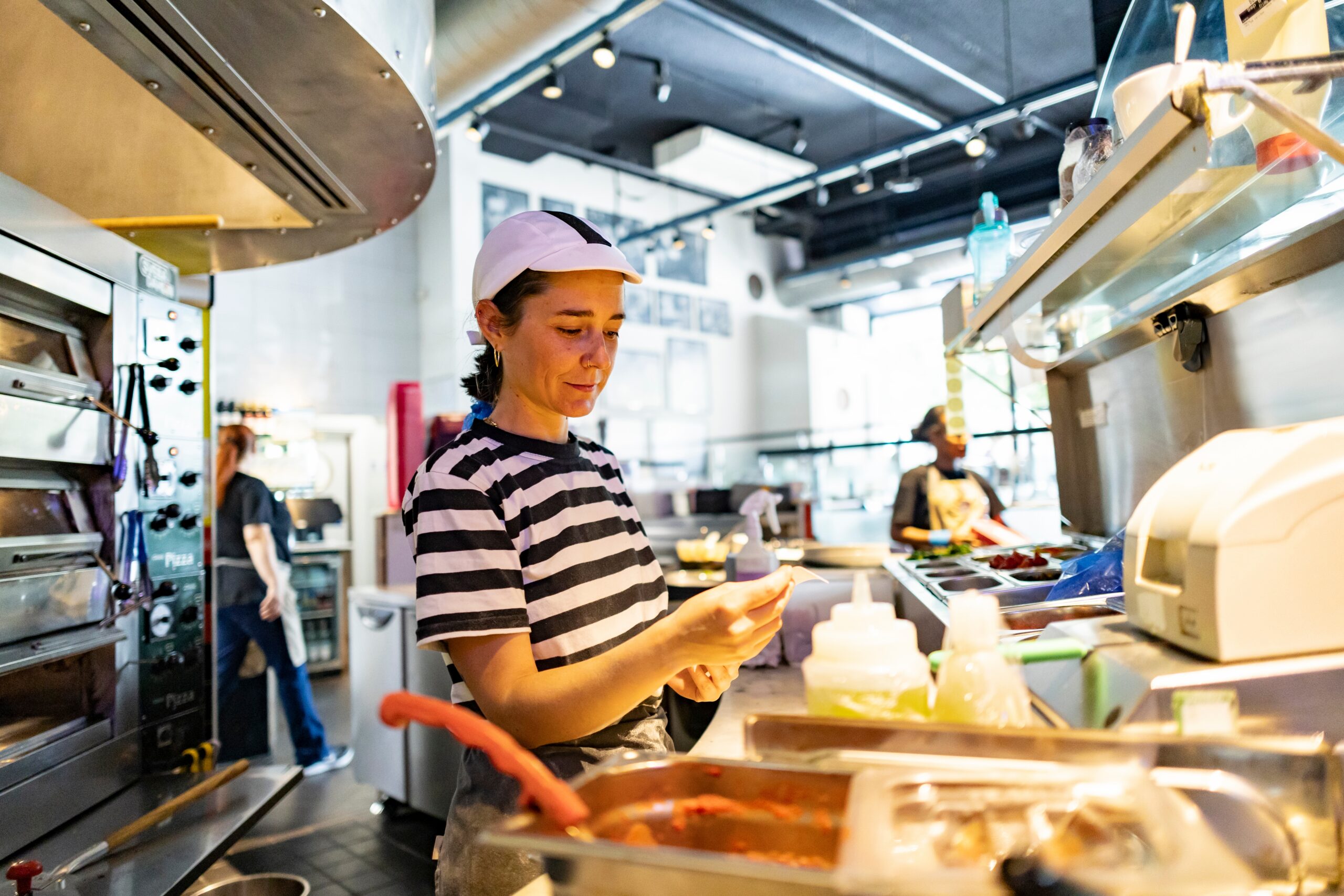
Most QSR kitchens follow a logical flow that mirrors the customer experience—from order placement to final handoff. That flow typically includes:
- Cold and dry storage zones near delivery areas
- Prep stations close to storage and assembly lines
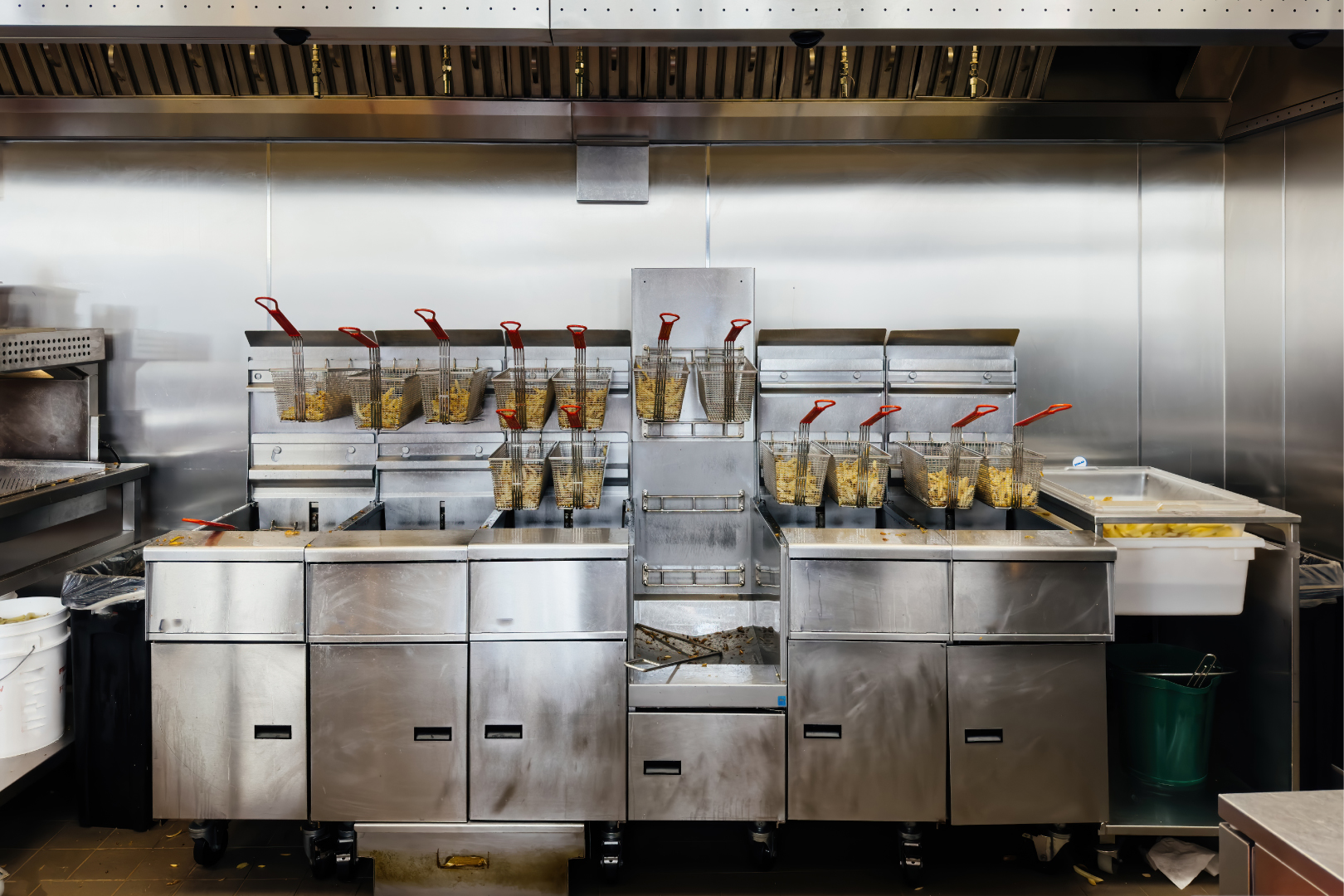
- Cooking lines centered around speed and volume
- Holding and packaging stations at the end of the line
The goal is to eliminate wasted motion and maximize throughput. This layout also supports better labor allocation during peak service hours, which is especially important when working with small or new crews. If you’re designing a new operation or updating your equipment, our Commercial Kitchen Equipment List offers a broader view of what’s essential across kitchen types.
High-Speed Cooking Equipment (Grills, Fryers, Microwaves)
In fast food kitchens, every second counts. Your cooking equipment needs to deliver consistent, speedy results. Must-haves include:
- Flat-top grills for burgers, breakfast items, and grilled proteins
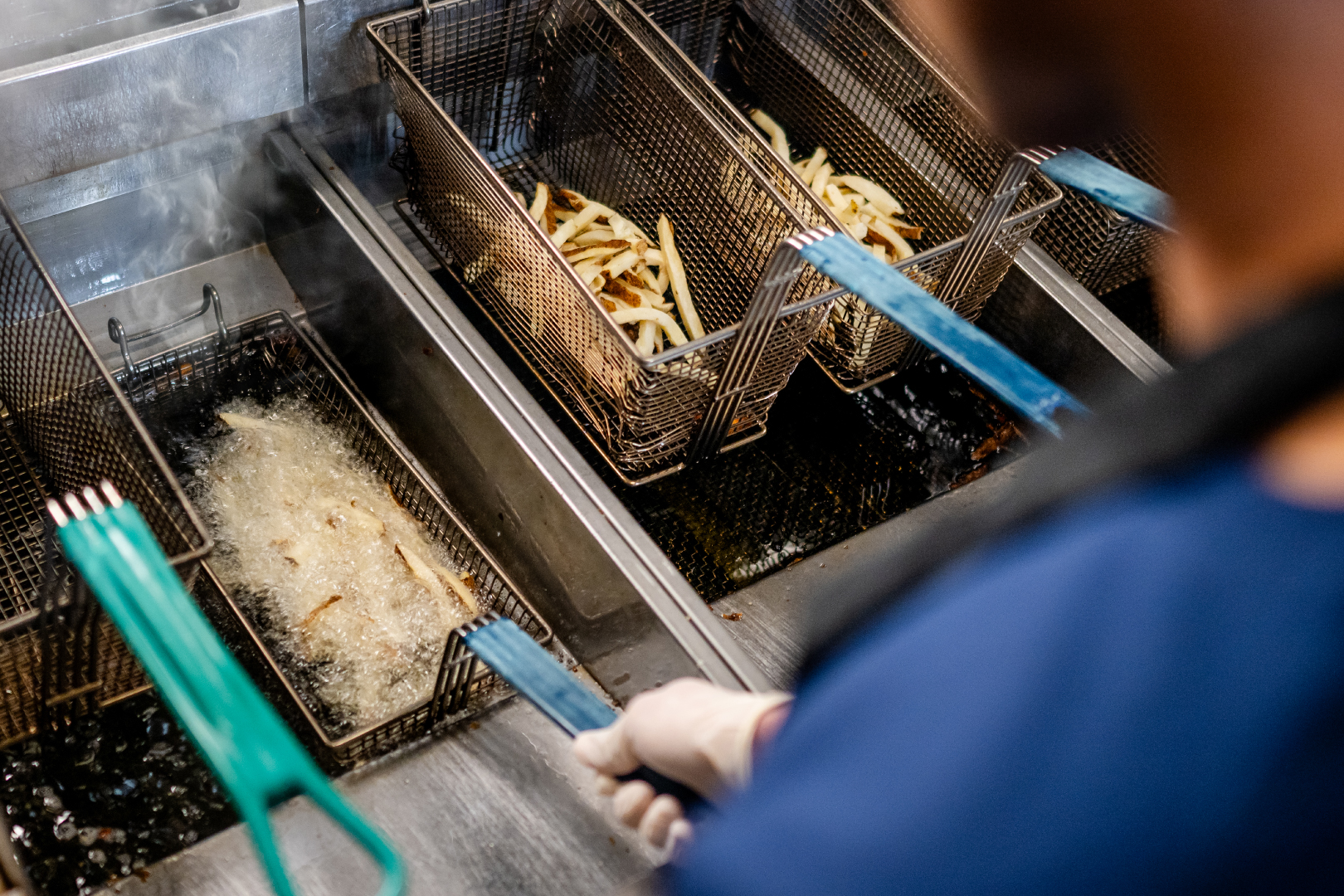
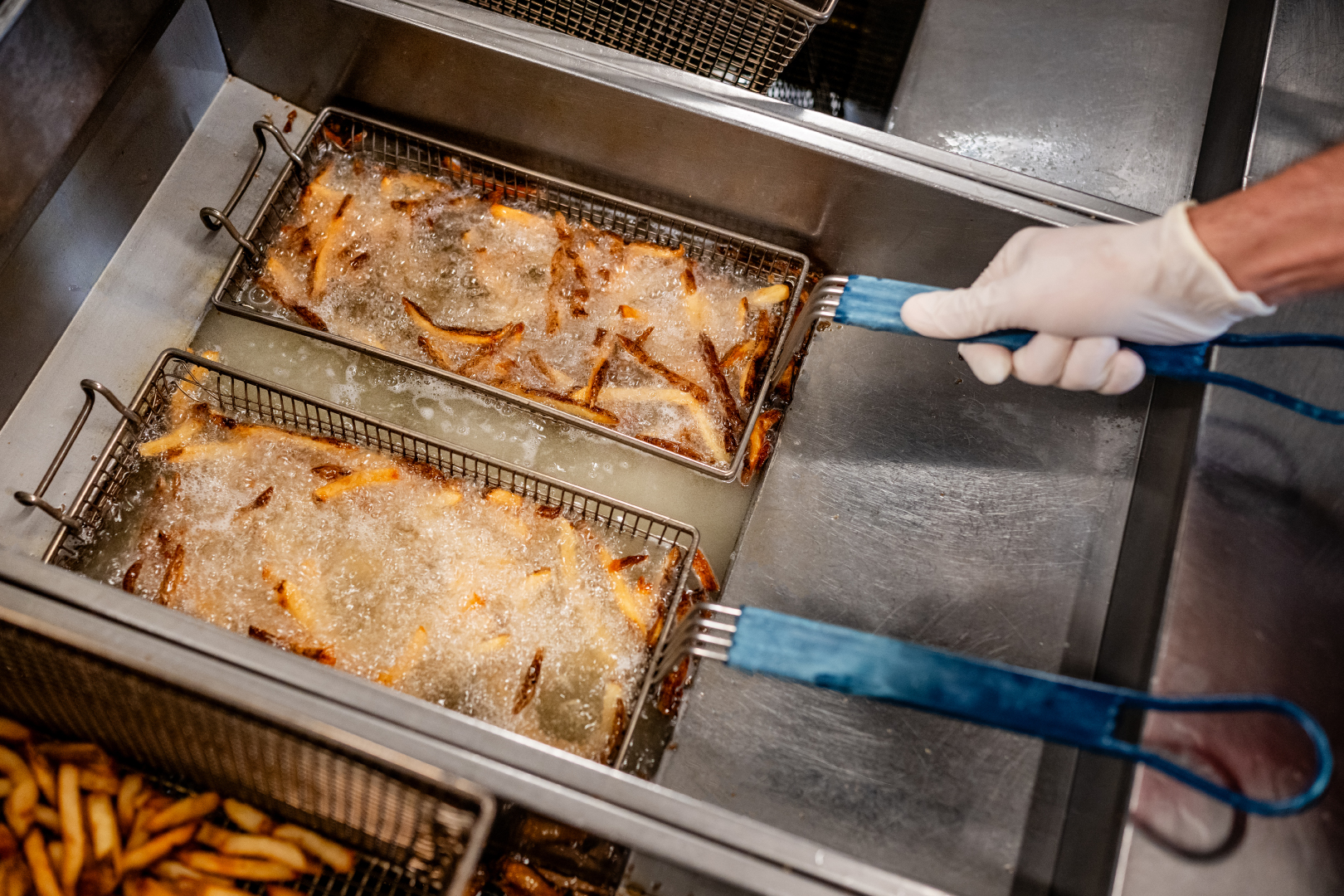
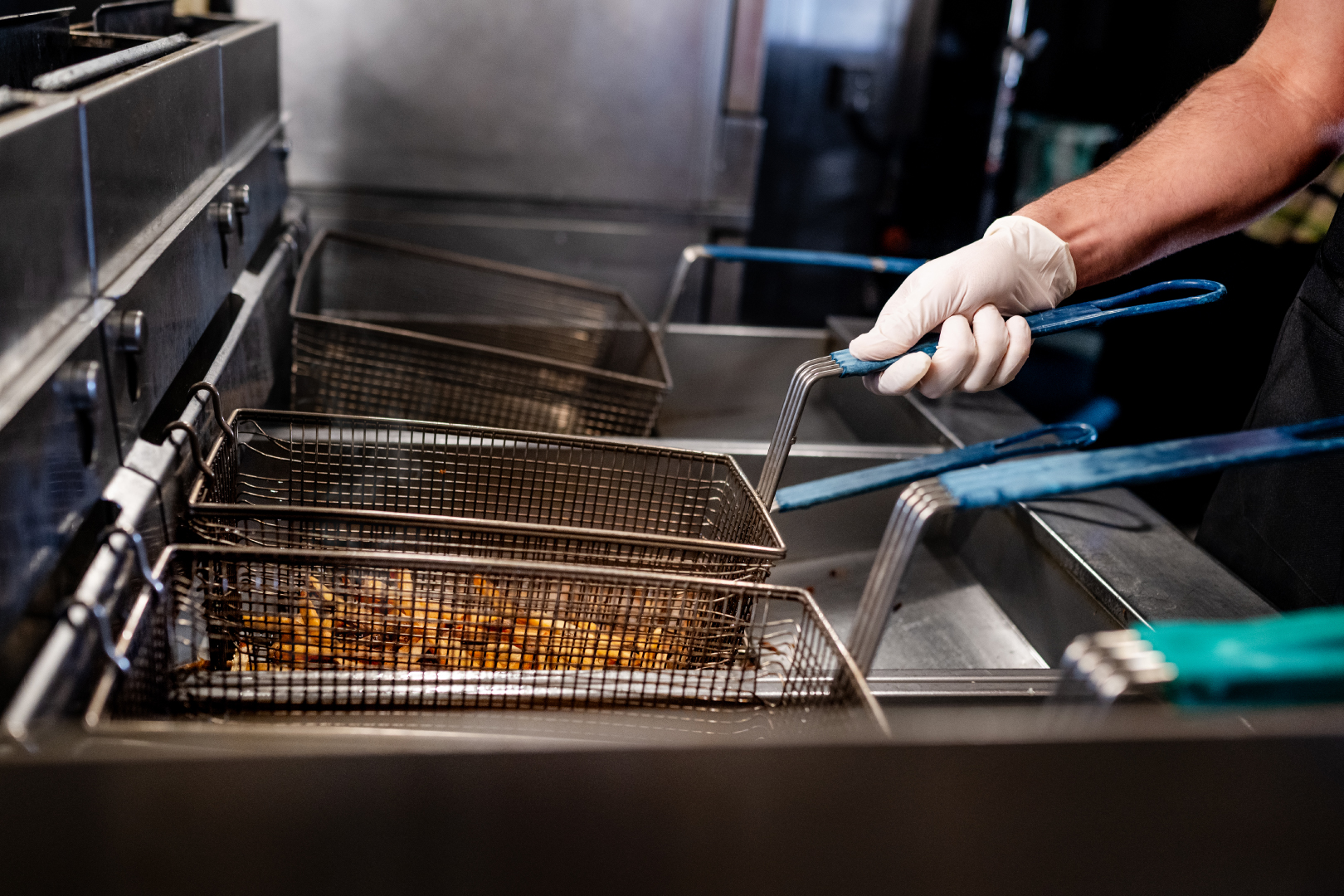
- High-capacity fryers with built-in filtration to keep up with fries and chicken orders
- Microwaves and rapid cook ovens for quick heat-and-serve items
- Toasters, sandwich presses, or clamshell grills, depending on your menu
Equipment selection should always match your menu strategy. If your operation relies heavily on fried foods, integrating an automated oil system can save time and reduce safety risks. Learn how automated cooking oil management supports consistency without adding labor.
Refrigeration, Freezers, and Holding Units
Keeping ingredients fresh and ready to go is non-negotiable in fast food. Cold storage and heat-holding systems help maintain food quality and safety while streamlining both prep and service workflows.
Essential cold storage equipment includes:
- Reach-in refrigerators and freezers, located near prep stations
- Under-counter units to maximize space
- Open-air merchandisers in front-of-house for bottled drinks or desserts
On the hot side, heated holding cabinets and drawers keep pre-cooked items at safe temperatures without drying them out. Pairing this setup with an efficient food prep workflow is key, which we break down in our Cafeteria Equipment List.
Workstations, Prep Tables, and Food Assembly Lines
Once items are cooked or held, it’s time to build the final order. Fast food kitchens benefit from a modular assembly-line setup, where each staff member is responsible for one part of the order.
Tools that help streamline food assembly:
- Stainless steel prep tables for durability and easy cleaning
- Condiment rails and bins, often refrigerated, for sandwich and salad builds
- Labeling systems to track made-to-order modifications
- Packaging stations with organized wrap, bags, and utensils
Each station should be clearly defined and designed to reduce steps, confusion, and rework. Your team’s speed will often depend more on the workflow layout than on their skill.
Ventilation, Fire Safety, and Cleaning Essentials
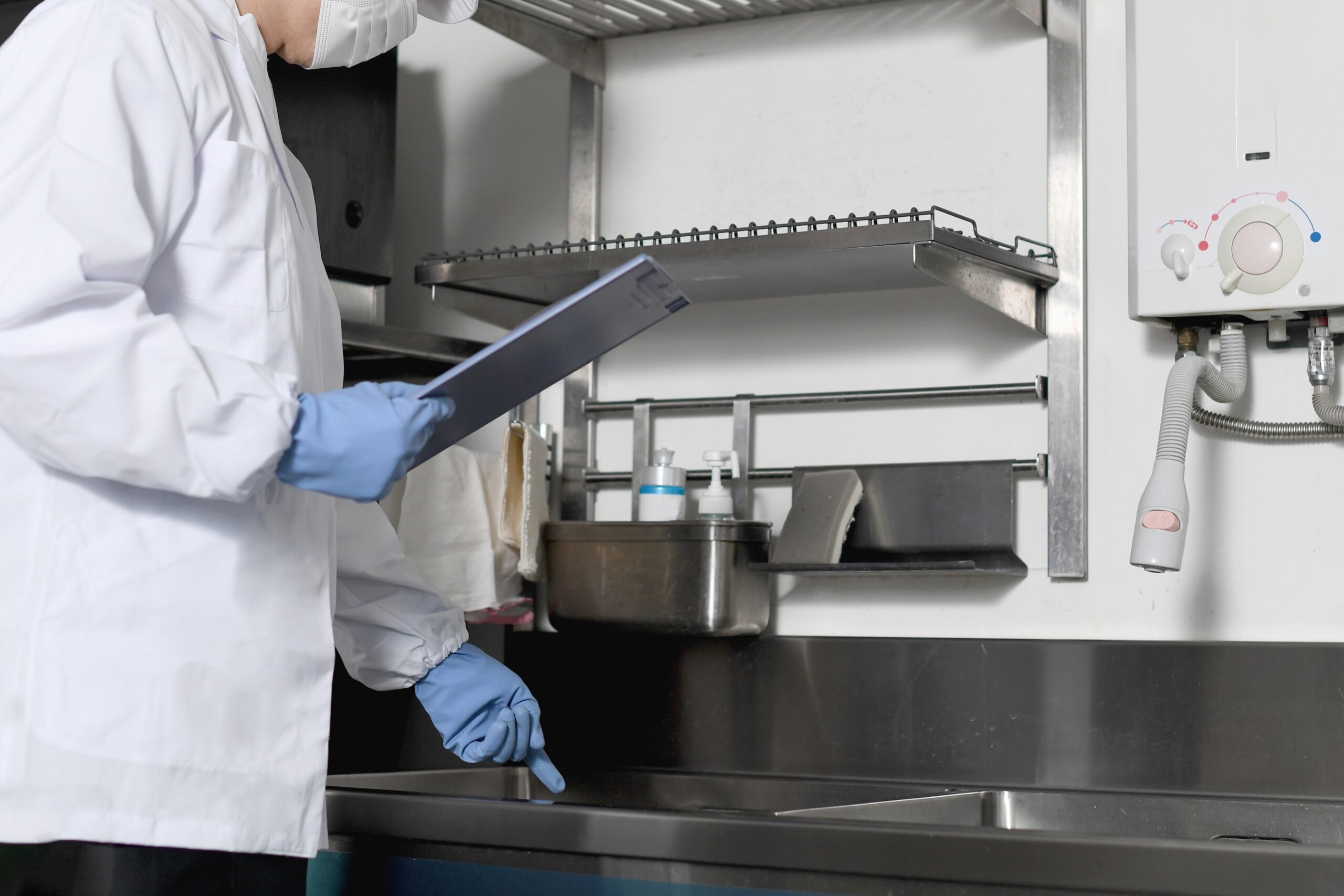
Safety and sanitation aren’t just legal requirements; they’re critical for keeping operations running smoothly. A surprise inspection, kitchen fire, or pest problem can shut down service in seconds.
Your safety and cleaning setup should include:
- Ventilation hoods with fire suppression systems over any open flame or fryer
- Non-slip floor mats and clearly marked wet zones
- High-efficiency dish machines or three-compartment sinks
- Grease traps and floor drains for daily cleaning
These features protect your crew, your customers, and your bottom line. For a broader safety checklist across restaurant formats, visit our Hotel Kitchen Equipment List.
Cooking Oil Filtration, Disposal, and Storage
Fryers are workhorses in nearly every fast food kitchen, but managing hot oil manually slows down service and increases risk. Many QSRs are now turning to automated solutions to streamline this process.
Smart oil management systems help with:
- Automated oil filtration, extending oil life and improving taste
- Hands-free disposal, eliminating the need to carry hot oil
- Waste oil monitoring and storage, which simplifies compliance
- Automated delivery and refill, reducing downtime
At Restaurant Technologies, we help QSR operators remove one of the biggest pain points in the kitchen. Our Automated Cooking Oil Management systems improve food quality, reduce injuries, and free up labor to focus on the customer experience.
Conclusion: Optimize QSR Efficiency with Restaurant Technologies
Fast food doesn’t mean cutting corners; it means making smart decisions that support speed, consistency, and safety at scale. From cooking lines to storage systems to oil management, your kitchen setup plays a direct role in your team’s success.
Restaurant Technologies partners with QSRs to deliver custom oil filtration, delivery, and disposal systems that fit seamlessly into your kitchen workflow. Whether you’re updating your setup or scaling to a new location, we’re here to help your kitchen perform at its best.