
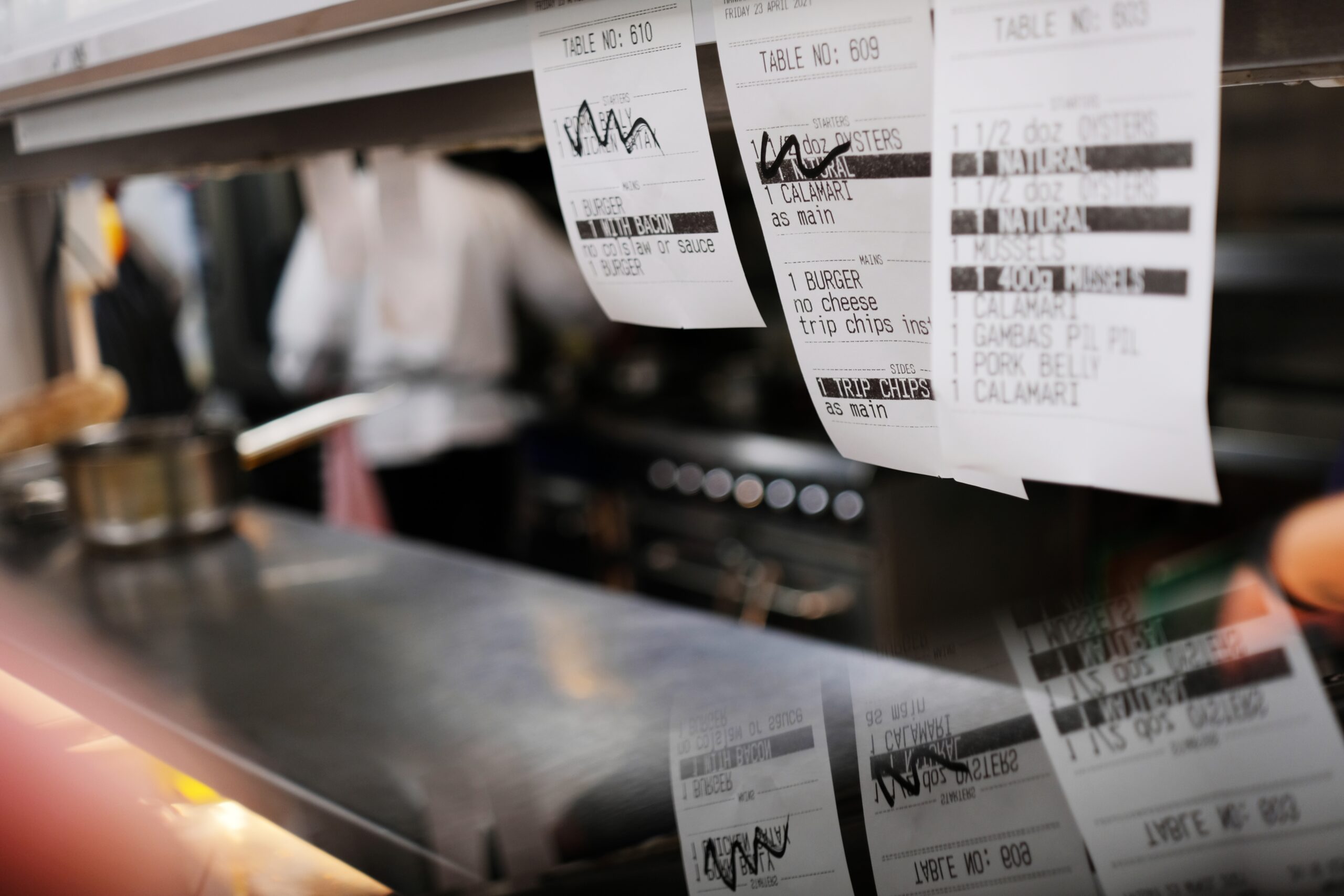
During the height of service, a restaurant kitchen can look like it is operating exactly as it should: tickets are moving, fryers are full, employees are crossing the line with purpose, and orders are making their way out to the dining room. What is harder to see is how much of that movement is actually helping the kitchen keep pace with demand and how much is being created by the way the work itself is set up. When employees are repeatedly stepping away from their stations to retrieve supplies or complete manual tasks elsewhere in the kitchen, the team may still be getting through the rush, but it is doing so with more friction than necessary.
For operators, efficiency comes down to how well the kitchen protects employee time and prevents recurring tasks from competing with food preparation and service. Looking closely at those points of friction can reveal whether the processes behind a busy shift are actually supporting consistent performance.
When Did “Busy” Become a Measure of Success?
“Busy” became an easy shorthand for productivity because it is visible. A full line and employees moving continuously between tasks can make a kitchen feel like it is performing at a high level, even when some of that activity is being created by inefficient processes. What is harder to see in the moment is how often employees are being pulled away from the work that directly supports service.
If a cook has to leave the line to retrieve supplies, refill equipment, or complete another routine task, that employee is still occupied, but the interruption can slow the work that actually moves orders forward. A 2024 analysis of restaurant operations identifies unnecessary movement and waiting as common sources of waste.1 A clearer picture of productivity starts to emerge when operators look at measures such as:
- Ticket times: Are orders moving through the kitchen at the pace they should during peak periods?
- Order accuracy: Are rushed or interrupted workflows creating more mistakes?
- Rework: How often are employees repeating tasks, remaking food, or correcting avoidable errors?
- Time away from stations: Which recurring tasks are pulling employees out of position during service?
Looking at those indicators alongside the workflows behind them can give operators a much clearer picture of whether the team’s effort is supporting smoother service or compensating for friction built into the operation.
Busy Kitchens Manage Tasks. Efficient Kitchens Manage Time.
Improving productivity does not necessarily mean asking an already stretched team to complete more work during a shift. A better starting point is understanding where employee time is currently going and which recurring processes require more attention than they should. The National Institute of Standards and Technology’s (NIST) value stream mapping methodology offers a useful framework for this type of evaluation by documenting each step in a process to identify waste and opportunities for improvement.2
In a commercial kitchen, that can start with following a recurring task from beginning to end and taking stock of:
- How often the task occurs
- How many employees are involved
- How many times something is retrieved, lifted, transferred, or transported
- How often employees leave their stations
- Where waiting, cleanup, or rework adds time
- Which steps follow the same predictable process every time
Cooking oil management shows how quickly those touchpoints can accumulate. What looks like one routine responsibility can involve several employee interactions throughout a shift. Employees may retrieve and lift JIBs before manually filling fryers, then later handle and transport used oil for disposal. When that workflow is repeated shift after shift and from one restaurant to the next, the time involved can add up considerably.
Key takeaway: Before trying to increase productivity, understand how much employee time each recurring process actually requires. The most useful opportunities to improve efficiency often come from reducing unnecessary steps and manual touchpoints within work that happens repeatedly across the operation.
Busy Kitchens React. Efficient Kitchens Build for the Rush.
Peak service can expose weaknesses in a kitchen workflow that are easy to overlook during slower periods. A process that feels manageable during prep can become a source of delay as ticket volume rises, particularly when employees have to leave the line to handle routine tasks. Across a larger restaurant operation, those pressure points can be harder to manage when processes vary between locations.
Building for the rush means considering whether critical workflows can hold up when conditions change. Before peak service, consider how the kitchen would respond to:
- An unexpected increase in ticket volume
- An employee calling out
- A less experienced team member taking over a routine task
- A location operating with fewer staff than planned
- A supply or equipment issue occurring during service
These situations can reveal where a process depends too heavily on individual employees or decisions that have to be made in the moment. Even routine supply needs can become disruptive when they have to be managed in the middle of service. Cooking oil delivery, for instance, can require employees to monitor inventory, coordinate replenishment, or handle bulk containers at times when the team is already focused on keeping orders moving.
Evaluating these workflows in advance gives operators an opportunity to build more reliable processes around peak demand and reduce the need for employees to improvise when the kitchen is under pressure.
Key takeaway: The strength of a kitchen workflow is often revealed when demand is highest. Processes designed to hold up as volume and staffing conditions change give teams more capacity to stay focused on service.
Busy Kitchens Rely on People. Efficient Kitchens Let Technology Do Its Job.
Technology can support restaurant teams in ways that extend well beyond completing a task faster. The right systems can automate routine processes while giving operators information that would otherwise require manual oversight. For growing restaurant groups, that visibility becomes increasingly valuable as there are more locations and teams to oversee.
Automate Repetitive Work
Look for processes where technology can reliably take responsibility for work that does not require an employee to make a decision each time it happens. Inventory and ordering platforms are one example, while equipment monitoring and other automated back-of-house systems can keep routine operational needs moving with less day-to-day intervention from the team.
Give Operators Better Visibility
The value of technology also lies in what operators can learn from it. Systems that track activity and performance can make it easier to see whether established procedures are being followed and recognize when a location may need attention before an issue begins affecting service.
That creates a more scalable form of oversight as a restaurant group grows. Operations leaders can use shared data to understand how processes are working across the business without piecing together the picture through individual checks at every restaurant.
Apply Automation Where It Removes the Most Friction
Cooking oil management is one place where automation and operational visibility can work together. Restaurant Technologies’ Total Oil Management solution automates the cooking oil workflow through a closed-loop system, including fresh oil delivery and fryer filling through push-button controls.
The T.O.M. Portal adds web-based monitoring of filtration activity and cooking oil usage, giving operators visibility across locations. Automated cooking oil disposal moves used oil into an enclosed tank for pickup, bringing another traditionally manual part of cooking oil management into the automated workflow.
Key takeaway: Technology can do more than automate individual tasks. Used strategically, it can give operators greater visibility and control over how critical processes are being carried out across the business.
Busy Kitchens Work Harder. Efficient Kitchens Work Smarter.
Keeping a kitchen moving through a busy service takes constant coordination, but how much of that effort is going toward the work your team actually needs to be doing? Where are employees spending time on routine tasks that could be handled more efficiently, and which of those demands become harder to manage as your operation grows?
Cooking oil is one area worth examining. Restaurant Technologies’ Total Oil Management solution brings more of that routine work into an automated workflow, helping operators manage cooking oil with less manual involvement from the team. RTI reports that customers save an average of 9 labor hours and $250 per week through the system, based on its 2024 survey of 301 customers.3
What could your team do with some of that time back? For a growing restaurant group, improving a process that happens every day can make the operation easier to manage as new shifts and locations are added.
Request a demo to see how Total Oil Management can help your kitchen run more efficiently.
Sources
- ASEJ Scientific Journal. “Implementing Lean Management in catering operations: limits and perspectives.” https://www.asej.eu/index.php/asej/article/view/830.
- NIST. “Value Stream Mapping.” https://www.nist.gov/mep/value-stream-mapping.
- Restaurant Technologies. “Automated Commercial and Restaurant Cooking Oil Management.” https://www.rti-inc.com/oil-management/