
Why Clean Restaurant Floors Are Critical
In a commercial kitchen, clean floors aren’t just about appearances—they’re a matter of safety and operational excellence. Slippery, greasy floors are one of the leading causes of workplace injuries in the foodservice industry. They’re also one of the first things health inspectors notice. Dirty floors invite pests, increase the risk of slip-and-fall accidents, and can lead to violations or even closures.
From the back-of-house to the front-of-house, clean floors protect your team, impress your guests, and preserve your brand’s reputation. A solid floor cleaning routine reduces long-term wear, extends the life of flooring materials, and minimizes damage from grease buildup or spills.
Moreover, customer perception is significantly influenced by floor cleanliness. According to a survey conducted by Cintas Corporation, 68% of customers would not return to a dining establishment with dirty floors. This underscores the importance of maintaining spotless floors to ensure customer retention and satisfaction.
Step-by-Step Guide to Cleaning Restaurant Floors
A clean restaurant floor starts with the right process. Here’s how to tackle daily cleaning in a way that removes grease and keeps your floors safe.
Pre-Cleaning Preparation
Start by clearing the area. Remove mats, trash, and loose debris. If you’re working during or near service hours, place clear signage to warn staff and guests that floors may be wet or slippery.
Choose tools appropriate for commercial use. Grease-fighting degreasers, heavy-duty mops or floor scrubbers, and safety signage should all be ready before you begin. PPE-like slip-resistant shoes and gloves should be worn to protect your cleaning crew.
Degreasing and Scrubbing Techniques
Restaurant kitchen floors take a beating from oils, sauces, and tracked-in dirt. Use a commercial-grade degreaser designed specifically for foodservice floors. Spray or pour the product on the floor and let it sit for a few minutes. This dwell time helps break down tough grease.
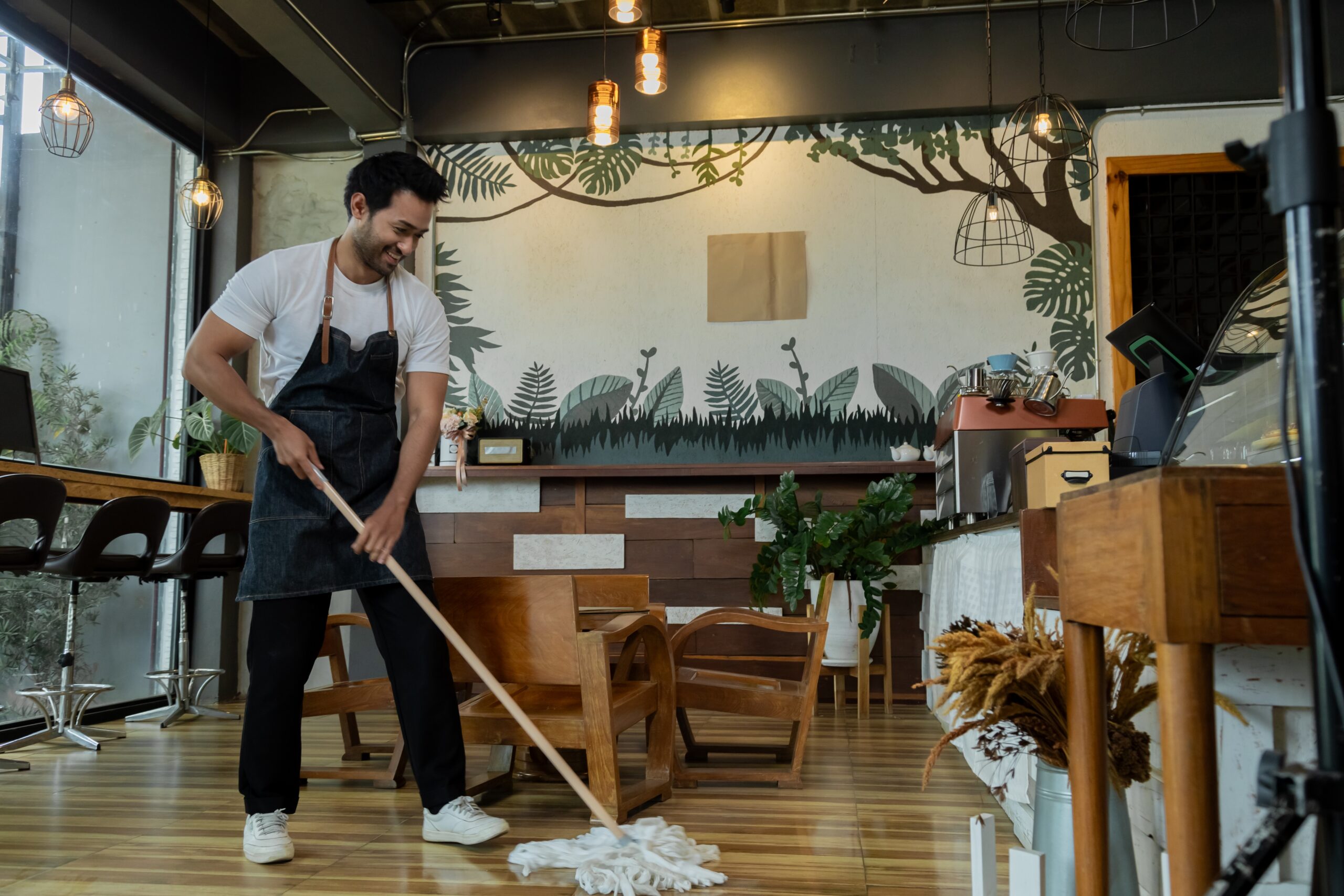
Use a deck brush or a mechanical floor scrubber to agitate the surface. Focus on high-traffic areas and underneath equipment where grease tends to accumulate. Mop up the residue using a clean mop and hot water, or use a wet vac for larger areas.
Drying and Slip Prevention Tips
Once the floor is cleaned, it’s important to dry it thoroughly. Wet floors, even when clean, still pose a slip hazard. Use fans or air movers to speed up the drying process in larger spaces. For smaller areas, use a clean, dry mop to absorb excess water.
Never remove caution signs until the floor is completely dry. Slip-resistant floor mats should be returned only after the surface is dry and clean.
Recommended Floor Cleaning Tools and Products
Having the right tools can make a major difference in both the quality and efficiency of your floor cleaning.
- Deck brushes: Ideal for loosening stubborn grease in corners or along baseboards.
- Flat mops and microfiber heads: More sanitary than string mops, and better at picking up fine debris.
- Floor scrubbers: Essential for large kitchens or dining rooms. Automatic scrubbers save time and ensure consistent cleaning.
- Squeegees: Great for moving water toward drains and reducing drying time.
- Commercial degreasers: Look for food-safe, pH-balanced products that won’t damage your floor finish.
- Dry mops and air movers: Important tools to prevent accidents during the drying stage.
When choosing products, always check the label to ensure they’re compatible with your floor type. Harsh chemicals can break down flooring materials or make surfaces more slippery over time.

How Often Should You Clean the Floors?
Not all parts of your restaurant need to be cleaned at the same frequency. Some areas require multiple cleanings a day, while others may be addressed less often.
- Kitchen floors: Clean at the end of each shift, and spot-clean as needed throughout service. Grease builds up fast and becomes a hazard if left overnight.
- Dishwashing areas: These get wet and slippery quickly. Mop frequently to keep water and soap from pooling.
- Front-of-house: Sweep and mop daily. Clean during off-hours to avoid disturbing guests.
- Storage rooms and walk-ins: Weekly cleaning is usually enough, but spot-clean any spills immediately.
- Bathrooms: Floors should be mopped and disinfected multiple times per day, especially during peak hours.
A cleaning schedule should be posted and followed consistently. Build these routines into staff responsibilities to ensure they become second nature.
Safety & Compliance Tips for Floor Maintenance
Maintaining clean floors is also about staying compliant with safety regulations. The Occupational Safety and Health Administration (OSHA) requires that walking surfaces be kept clean and dry to prevent slips, trips, and falls.
- Use non-slip mats in greasy or wet areas.
- Place clear signage when cleaning floors.
- Provide proper PPE for staff responsible for floor maintenance.
- Train staff on how to use degreasers, scrubbers, and mops correctly.
- Establish written cleaning protocols as part of your safety documentation.
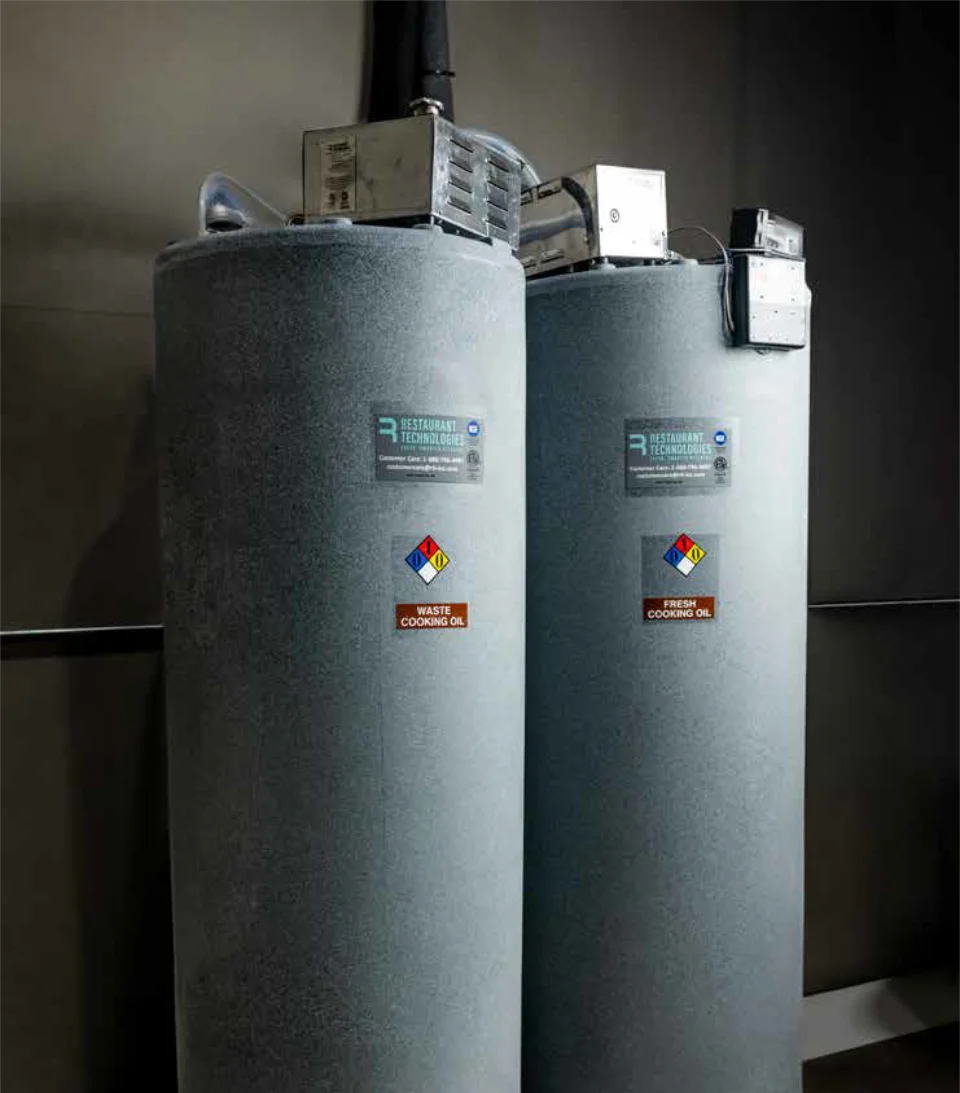
Grease buildup, especially in commercial kitchen walkways, is one of the most overlooked hazards. Pairing regular cleaning with automated systems like automated cooking oil management can significantly reduce the amount of oil that ends up on the floor.
Wrap-Up: Keeping Restaurant Floors Safe and Clean
Clean restaurant floors protect more than your staff—they protect your bottom line. Slippery, greasy, or poorly maintained floors lead to injuries, lawsuits, and lost productivity. But with the right products, a structured routine, and daily attention, your team can keep floors spotless, safe, and up to code.
A well-executed floor cleaning program should be part of your larger back-of-house strategy. It’s not just about cleanliness—it’s about building a safer, more efficient restaurant from the ground up.
Let Restaurant Technologies help you take the grease out of your workflow, starting from the fryer and ending at the floor—with specialized solutions that support your team’s work and help your business stay compliant with industry standards.
Sources:
Occupational Safety and Health Act. OSHA Regulations for Restaurants. https://www.webstaurantstore.com/article/255/osha-regulations-for-restaurants.html?srsltid=AfmBOoqr8XdZnI7TIv3P1vMLlZgoG3rurBIsquLbcXOxXCr6r84PslTM
Advantage Cleaning. How To Clean a Restaurant Floor. https://advantagecleaningllc.net/commercial-cleaning-checklists/how-to-clean-a-restaurant-floor/#:~:text=*%20Remove%20debris%20by%20sweeping%20the%20floor.,soap%20and%20degreaser.%20*%20Dry%20the%20floor.
Buildings. Dirty Restaurants Consumer Retention Survey. https://www.buildings.com/industry-news/article/10191172/dirty-restaurants-consumer-retention-survey