
Managing used cooking oil is an unavoidable part of operating a commercial kitchen, but the way that oil is handled can have a significant impact on safety, labor, efficiency, and day-to-day operations. For high-volume kitchens in particular, manually transferring used cooking oil between fryers and storage containers can add unnecessary steps to an already demanding workflow.
A commercial fryer oil recycling system can simplify that process by creating a more controlled way to filter, handle, store, and ultimately recycle used cooking oil. However, the right setup depends on more than how many fryers are in the kitchen. Operators should consider cooking oil volume, staffing, available space, existing workflows, service requirements, and long-term costs before selecting a solution.
Understanding Commercial Fryer Oil Recycling Systems
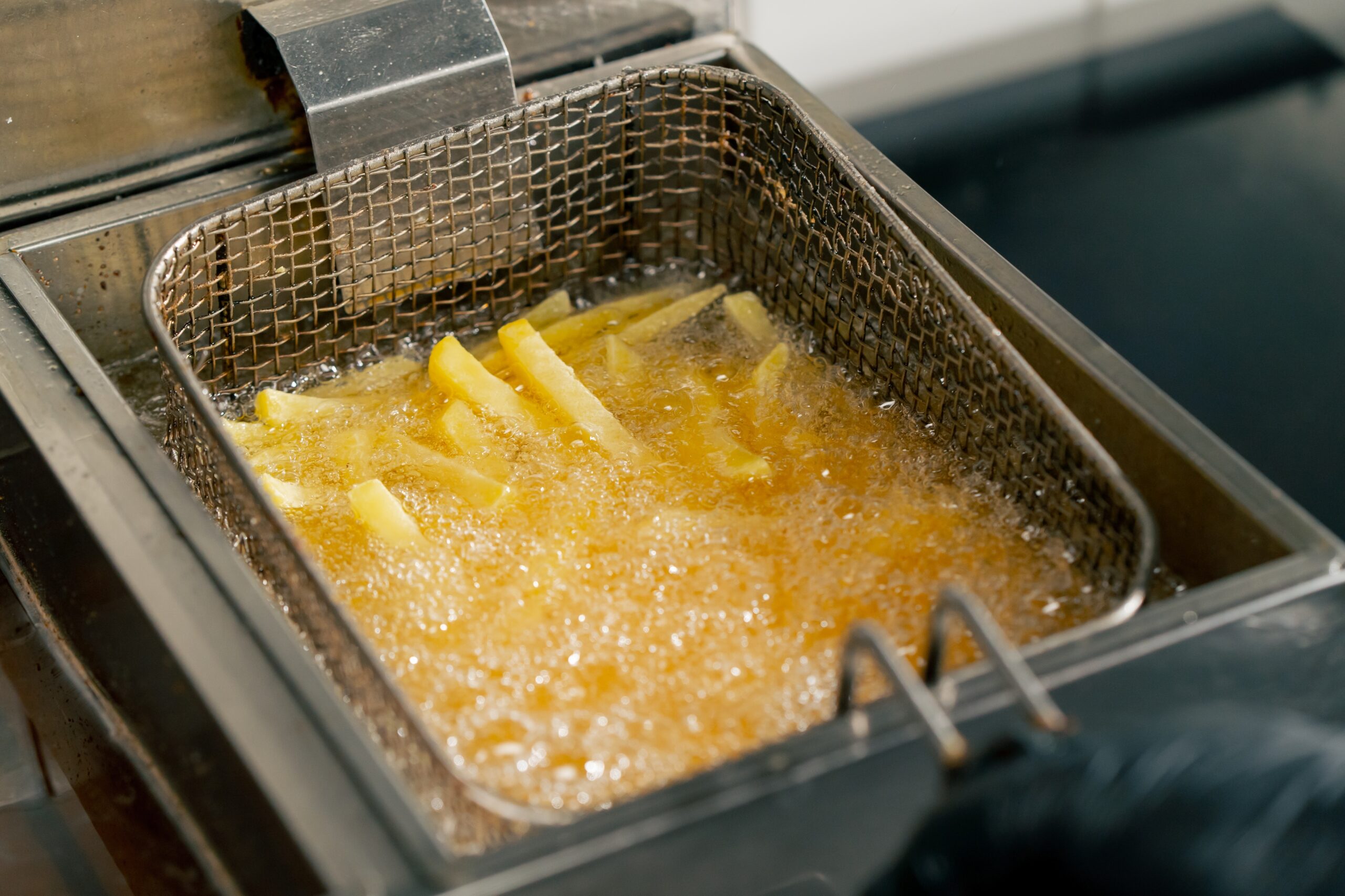
Commercial fryer oil recycling systems help kitchens manage cooking oil throughout its lifecycle. Depending on the system, that can include filtering cooking oil during its usable life, transferring used cooking oil away from the fryer, storing it securely, and preparing it for pickup and recycling.
For high-volume operations, this process can eliminate several manual tasks. Instead of employees carrying containers of cooking oil through the back-of-house, an automated system can move fresh and used cooking oil through an enclosed network.
The safety implications are important. OSHA identifies deep fryers as a significant source of burn injuries in restaurants and specifically advises employees not to move or strain containers while cooking oil is hot.¹
A well-designed system can help commercial kitchens:
- Reduce manual cooking oil handling
- Improve consistency across shifts and locations
- Simplify used cooking oil collection
- Support safer back-of-house workflows
- Reduce spills and cooking oil messes
- Improve visibility into cooking oil usage
- Create a more consistent process for cooking oil recycling
The greatest operational value typically comes from viewing recycling as one part of a broader cooking oil management process rather than treating used cooking oil disposal as an isolated task.
Evaluating Your Kitchen’s Oil Management Needs
Every commercial kitchen operates differently. A quick-service restaurant with multiple fryers running throughout the day has very different requirements than a hotel kitchen with intermittent frying volume.
Before comparing systems, operators should document how cooking oil currently moves through the kitchen. Consider how much is used, how frequently fryers are filtered, how used cooking oil is removed, where it is stored, and which employees are responsible for each task.
Important factors include:
- Number and size of fryers
- Average cooking oil usage
- Peak frying periods
- Number of employees handling cooking oil
- Frequency of oil changes
- Existing filtration practices
- Available back-of-house space
- Distance between fryers and storage areas
- Used cooking oil pickup frequency
- Number of locations using the same operating procedures
Understanding the current workflow makes it easier to identify where automation could provide the greatest operational benefit.
Determining Required Capacity
Capacity should reflect actual cooking oil usage rather than estimates based solely on restaurant size.
A kitchen that produces large quantities of fried food may require substantially more cooking oil storage than an operation with only a small portion of its menu coming from the fryer. Operators should review historical cooking oil consumption, delivery frequency, and used cooking oil volume when determining system requirements.
Undersizing can result in more frequent servicing or insufficient capacity during high-volume periods. Oversizing can consume valuable kitchen space and add unnecessary equipment costs.
Multi-unit operators should also account for differences among locations. Fryer configurations, menu mix, and sales volume may vary significantly even when locations follow the same brand standards.
Considering Workflow Integration
Equipment placement can be just as important as capacity.
Traditional workflows may require employees to drain cooking oil into containers, transport it through the kitchen, and empty it into a separate storage tank. Each additional step takes time and creates another opportunity for spills or employee contact with hot cooking oil.
OSHA has documented restaurant injuries involving employees carrying containers of hot cooking oil, including incidents resulting in serious burns.² Designing a workflow that minimizes manual transportation can therefore support both efficiency and safety.
When evaluating installation requirements, consider:
- Fryer locations
- Employee traffic patterns
- Existing utilities and equipment
- Tank placement
- Delivery and pickup access
- Cleaning procedures
- Space required for servicing equipment
Installation should also be planned around operating schedules so that implementation creates as little disruption as possible.
Key Features to Look for in a Recycling System
Not every cooking oil system offers the same capabilities. Operators should prioritize features that solve measurable operational problems rather than selecting equipment based on features they may rarely use.
One important consideration is cooking oil filtration. Consistent filtration removes food particles and other debris that can affect cooking oil performance, helping kitchens maintain more consistent frying conditions between oil changes.
Other capabilities to evaluate include:
- Automated transfer: Moves cooking oil without requiring employees to carry open containers through the kitchen.
- Enclosed storage: Keeps fresh and used cooking oil contained within dedicated tanks.
- Filtration monitoring: Helps operators determine whether required filtration procedures are being followed.
- Usage tracking: Provides visibility into cooking oil consumption and operational trends.
- Safety controls: Helps prevent accidental transfers, spills, or improper operation.
- Multi-location reporting: Gives restaurant groups greater visibility across their operating footprint.
- Reliable servicing: Helps keep equipment operating without creating additional responsibilities for kitchen teams.
Automation should ultimately make the process simpler. A system that introduces complicated procedures or requires excessive employee intervention may simply replace one operational burden with another.
Comparing In-House vs. Third-Party Oil Management Solutions
Commercial kitchens generally have two broad options: purchase and manage equipment internally or work with a third-party provider that manages more of the cooking oil lifecycle.
An in-house approach may give operators direct control over equipment selection, maintenance schedules, and vendor relationships. However, the restaurant may also assume responsibility for equipment maintenance, employee training, cooking oil procurement, storage, used cooking oil coordination, and system repairs.
A managed third-party solution can consolidate several of those responsibilities. Depending on the provider, service may include equipment, maintenance, cooking oil delivery, monitoring, used cooking oil pickup, and recycling.
When comparing the two approaches, operators should consider more than the initial equipment price. Labor requirements, service reliability, maintenance responsibilities, training, cooking oil waste, and administrative time can all affect the actual cost of managing the system.
For multi-unit restaurant groups, standardization is another consideration. A managed system may make it easier to establish consistent processes across locations rather than relying on each restaurant to manage cooking oil independently.
Evaluating Service, Support, and Compliance
Cooking oil equipment operates in a demanding commercial kitchen environment, making ongoing service an important part of system selection.
Before choosing a provider, operators should understand:
- Who maintains the equipment
- What preventative maintenance is included
- Typical service response times
- How emergency issues are handled
- Who trains new employees
- How replacement parts are managed
- How used cooking oil pickups are scheduled
- What reporting or documentation is available
Compliance requirements should also be evaluated based on the kitchen’s location and operating environment. Local requirements can affect storage, collection, plumbing, fire safety, waste handling, and other aspects of the installation.
Operators should verify applicable requirements with local authorities and qualified vendors rather than assuming one installation standard applies everywhere.
Calculating Total Cost of Ownership
The purchase price only represents one portion of the cost associated with a commercial fryer oil recycling system.
A more complete evaluation should account for:
- Equipment and installation
- Cooking oil purchases
- Employee labor
- Routine maintenance
- Repairs and replacement components
- Filtration supplies
- Used cooking oil collection
- Employee training
- Cooking oil waste
- Cleaning associated with spills and manual handling
Labor can be particularly easy to overlook. A task that takes only a few minutes becomes significant when employees repeat it across several fryers, multiple shifts, and hundreds of operating days each year.
Operators should compare those ongoing expenses against the expected lifespan of the system and the operational savings it can produce.
A comprehensive cooking oil management solution may also combine functions that would otherwise require separate vendors or internal processes, making the total operating model more important than any single line-item cost.
Common Mistakes to Avoid When Selecting a System
Choosing a cooking oil recycling system without fully understanding the kitchen’s requirements can create new problems instead of solving existing ones.
Common mistakes include:
- Focusing only on upfront price: Lower equipment costs do not necessarily mean lower long-term operating costs.
- Estimating capacity instead of measuring usage: Actual cooking oil consumption provides a more reliable basis for sizing.
- Ignoring kitchen layout: Poor equipment placement can add unnecessary steps to employee workflows.
- Overlooking service requirements: Equipment downtime can quickly become an operational problem in high-volume kitchens.
- Failing to account for growth: Additional fryers, locations, or menu changes can increase future capacity requirements.
- Treating recycling as a standalone process: Filtration, delivery, storage, usage monitoring, and used cooking oil handling all influence overall performance.
- Failing to train employees: Even automated equipment requires clear operating procedures and proper employee training.
- Assuming requirements are universal: Local regulations and facility conditions should be reviewed before installation.
Operators should also avoid evaluating a system without involving the employees who work around the fryers every day. Kitchen managers and team members can often identify workflow issues that may not be obvious from equipment specifications alone.
Choosing the Right Recycling System for Your Kitchen
The right commercial fryer oil recycling system should fit the way your kitchen actually operates. Frying volume, system capacity, kitchen layout, filtration practices, staffing, service requirements, safety, and total operating costs should all factor into the decision.
For busy commercial kitchens, automation can bring several stages of the cooking oil lifecycle into one more consistent process. Restaurant Technologies’ Total Oil Management solution uses a closed-loop system that combines dependable fresh cooking oil delivery, automated filtration and monitoring, enclosed storage, and hands-free used cooking oil disposal. This approach reduces the amount of manual cooking oil handling required from kitchen employees while giving operators greater visibility into cooking oil usage and filtration performance.
Used cooking oil collected from customer locations is then transported to refinery partners and converted into biofuels, supporting a more streamlined approach from fresh cooking oil delivery through used cooking oil recycling.
Rather than selecting a system based on a single feature or upfront cost, operators should evaluate how well the solution addresses their complete cooking oil workflow. The strongest fit is one that makes everyday operations safer, simpler, and more consistent without adding unnecessary complexity for kitchen teams.
Sources
- Occupational Safety and Health Administration (OSHA). Young Worker Safety in Restaurants: Cooking. OSHA identifies hot cooking oil and deep fryers as restaurant burn hazards and recommends safe handling practices around fryer equipment.
- Occupational Safety and Health Administration (OSHA). Accident Report Detail: Restaurant Worker Is Burned by Hot Cooking Oil. OSHA documents a restaurant employee hospitalization after hot cooking oil was manually transported through the workplace.