
In every commercial kitchen, used oil has to go somewhere.
Manual oil removal is one of those tasks that tends to stay in the background, handled between prep and service without much attention. At a single location, it can feel manageable. Teams get familiar with the process, work around the mess, and keep things moving.
As brands grow, though, that routine becomes harder to maintain. More locations bring more people, more volume, and more coordination. What once felt simple becomes increasingly difficult to standardize, monitor, and control. And when hot oil is involved, even small inconsistencies can lead to real consequences.
Why Manual Oil Removal Becomes Riskier as You Scale
As operations expand, the challenge is not just volume. It is consistency.
Across multiple locations, even small differences in how oil is handled can create gaps in execution. One team may follow best practices, while another develops workarounds to save time. Over time, those inconsistencies become harder to track and correct, especially as staffing changes and new employees are trained on slightly different processes.
This is where manual systems start to break down. Without a standardized approach, maintaining control across every unit becomes increasingly difficult.
Several factors make manual oil removal riskier at scale:
- Increased volume: More frying means more used oil to manage each day
- More staff involvement: Greater reliance on consistent training and execution
- Higher coordination demands: Disposal schedules must align across locations
- Reduced visibility: Leadership teams have limited insight into how oil is handled at each site
Individually, these challenges may seem manageable. Together, they create a system that is difficult to standardize and even harder to control. When something goes wrong, the impact extends beyond a single location and affects the broader operation.
The Hidden Risks Behind Manual Oil Handling
Manual oil removal doesn’t always feel risky, until it is.
Because it’s built into the daily routine, many of the risks go unnoticed. Teams adapt to workarounds, and small inefficiencies start to feel normal. Over time, those patterns create exposure that can impact safety, operations, and compliance.
Here’s where those risks tend to show up.
1. Employee Safety and Injury Exposure
Handling hot oil is one of the most physically demanding and potentially dangerous tasks in the kitchen.
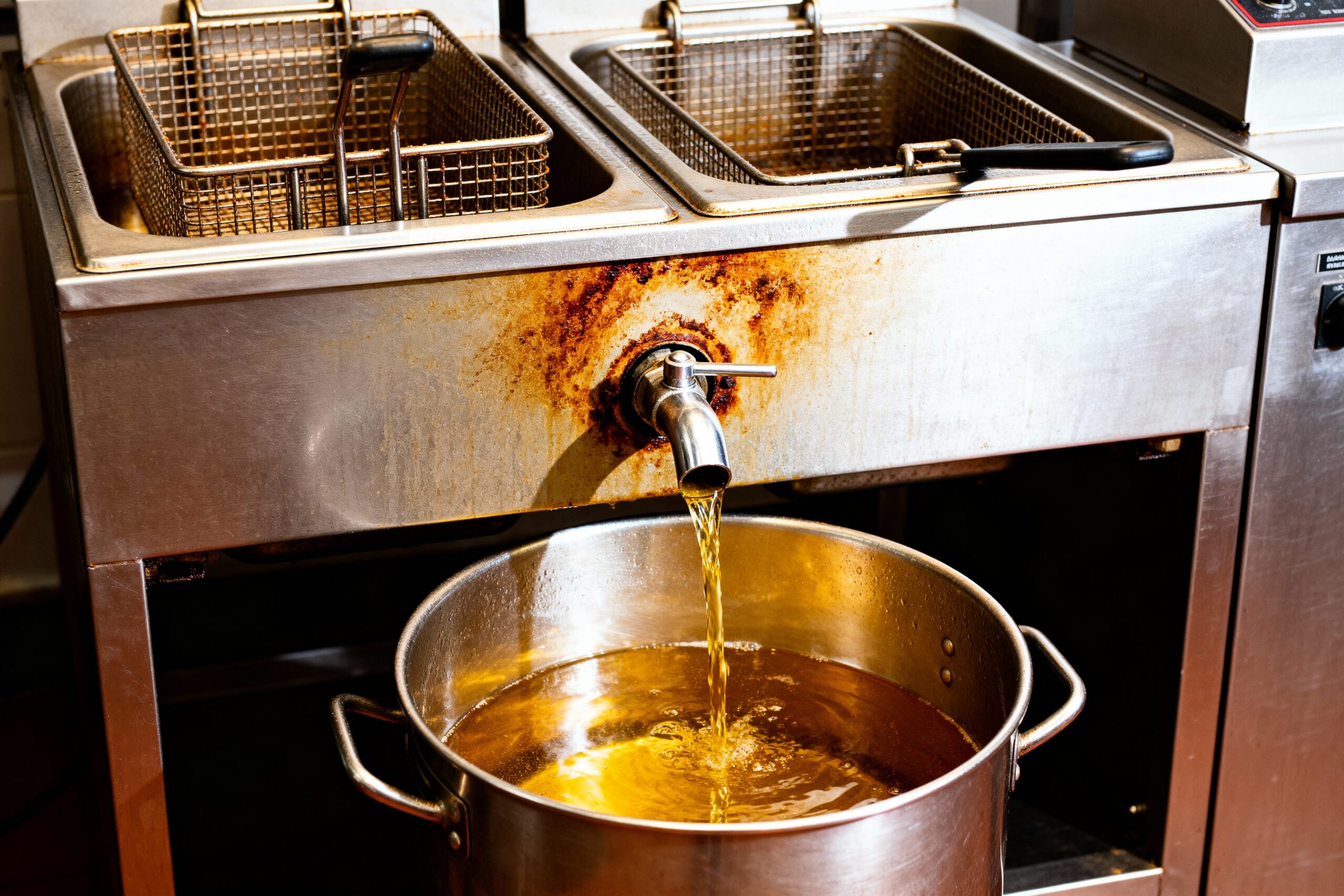
Manual removal often involves carrying or transferring hot oil, navigating tight spaces, and working quickly to avoid disrupting service. During busy shifts, those conditions increase the likelihood of mistakes.
Common risks include:
- Burns from splashes or improper handling
- Slips caused by spills on kitchen floors
- Strain injuries from lifting heavy containers1
Even with careful teams, the physical nature of the task creates unavoidable risk exposure. As volume increases, so does how often these incidents occur. For growing chains, that can lead to higher incident rates, increased workers’ compensation claims, and added pressure on staff.
2. Operational Disruption and Service Interruption
Manual oil removal often becomes necessary at the worst possible time, right in the middle of service when kitchens are already stretched thin.
What should be a routine task suddenly competes with production. Staff are pulled into coordinating disposal, handling cleanup, and working around the disruption, all while trying to keep orders on track. It breaks the rhythm of the kitchen and adds pressure where there’s already very little room for it.
When pickup timing is inconsistent or schedules slip, the situation becomes even harder to manage. Teams may find themselves dealing with:
- Overflowing storage areas
- Last-minute adjustments during service
- Additional labor spent managing disposal logistics
Individually, these instances may seem minor. But across multiple locations, they start to chip away at efficiency. Over time, those small, repeated disruptions can have a measurable impact on overall performance.
3. Compliance and Environmental Liability
Used oil isn’t just a byproduct. It’s a regulated material that needs to be handled, stored, and removed properly. At a single location, keeping an eye on compliance is relatively straightforward.
At scale, it becomes a different story. More locations mean more people, more processes, and more opportunities for inconsistency to creep in.
Manual systems make it harder to maintain alignment across:
- Storage practices
- Disposal methods
- Documentation and tracking
And those gaps are not always obvious until they become a larger problem. Whether it’s a failed inspection, an environmental concern, or added scrutiny from regulators, the risk builds in the background.2
As your footprint grows, so does the expectation to get it right every time. Without more structure in place, keeping every location aligned becomes a lot harder than it should be.
Why Growing Restaurant Chains Are Automating Oil Removal
For many restaurant brands, the shift to automation isn’t about fixing what’s broken. It’s about making sure today’s processes can keep up with tomorrow’s growth.
As operations expand, consistency becomes harder to maintain and more important to get right. What used to rely on team execution and oversight starts to benefit from more structure. That’s where solutions like cooking oil disposal come in, replacing manual handling with a more controlled, closed-loop approach that removes variability from the process.
Rather than asking every location to handle oil the exact same way, automation builds that consistency in. It reduces reliance on manual execution, lowers risk, and frees up staff to stay focused on service instead of managing a messy, time-sensitive task.
With automation in place, teams benefit from:
- Reduced employee handling of hot oil
- Scheduled and predictable removal services
- Cleaner, enclosed storage systems
- More consistent processes across locations
Systems like oil rendering tanks support safe, enclosed storage, while automated cooking oil management connects removal with delivery and monitoring, creating a more connected and predictable approach to oil handling.
For growing brands, that added structure translates into fewer operational gaps, more visibility across locations, and greater confidence that critical processes are being handled the right way every time.
Reducing Risk While Strengthening Operational Control
Growth puts pressure on the systems behind the scenes. What works at a single location rarely holds up across dozens without something starting to break down.
Manual oil handling is one of those processes that becomes harder to manage over time. Variability increases, visibility drops, and small gaps turn into larger operational risks that are difficult to catch before they escalate.
Automation changes that dynamic. It replaces a highly manual, inconsistent task with a more controlled, repeatable approach. When paired with solutions like cooking oil delivery and fryer oil filtration, oil management becomes part of a connected system that can scale alongside the business, not against it.
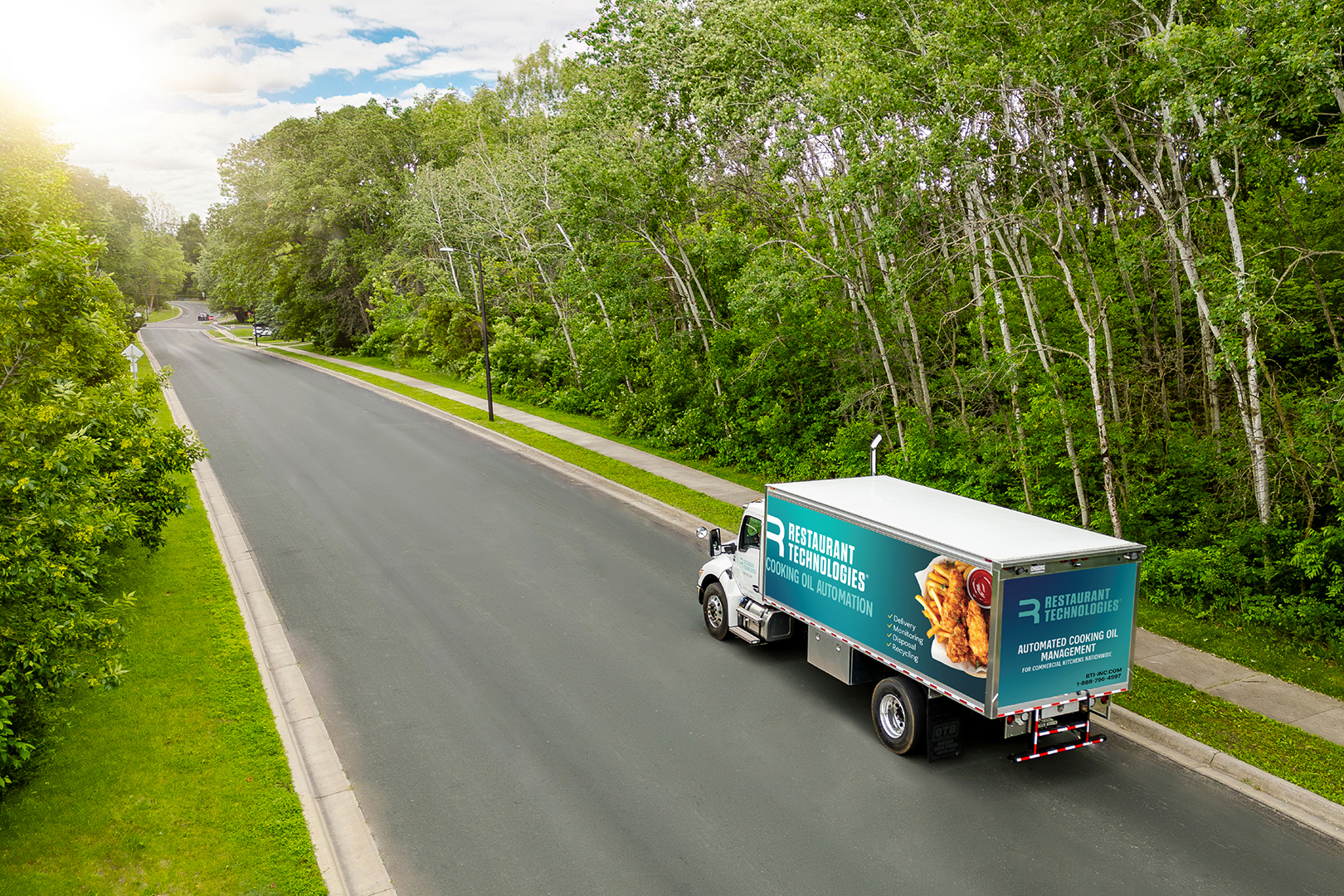
Restaurant Technologies helps operators make that shift, bringing together delivery, monitoring, and removal in a closed-loop system designed for multi-unit growth. For brands looking to reduce risk and gain more control as they expand, it’s a smarter way to manage one of the kitchen’s most overlooked challenges.
To see how it could work across your locations, get started with Restaurant Technologies today.
Sources:
- U.S. Bureau of Labor Statistics (BLS). Injuries, Illnesses, and Fatalities in Food Service and Drinking Places. https://www.bls.gov/iif/
- Environmental Protection Agency (EPA). Managing Used Cooking Oil and Grease Materials. https://www.epa.gov/rcra