

Technology has reshaped every aspect of restaurant operations, from how guests discover and order food to how kitchens manage inventory, labor, and back-of-house workflows. What began with basic point-of-sale systems has evolved into comprehensive digital ecosystems that touch every corner of commercial foodservice.
This article explores how technology is reshaping the restaurant industry, from guest-facing tools to back-of-house automation and data-driven oversight. Understanding these shifts helps operators focus on the solutions that deliver measurable gains in efficiency, safety, and profitability.
The Evolution of Technology in the Restaurant Industry
Technology has reshaped restaurant operations, moving the industry from paper-based systems to fully integrated digital platforms. What once relied on handwritten tickets, clipboards, and manual calculations now runs through connected systems that manage orders, labor, inventory, and reporting in real time.
Restaurant technology trends have accelerated over the past decade. POS systems, kitchen display screens, and mobile ordering are now standard expectations. Research shows 65% of QSR guests have used an order-ahead app, including nearly 90% of diners ages 18–24, underscoring how embedded digital ordering has become.1
Today, new technology in restaurants extends well beyond the dining room. Back-of-house automation supports tasks ranging from oil filtration to predictive equipment monitoring, redefining efficiency across commercial kitchens.
How Technology Changed the Guest Experience
The restaurant experience looks nothing like it did a decade ago. Digital tools now shape every touchpoint, from discovery to payment.
Technology has transformed guest interactions in several key ways:
- Online reservation platforms eliminated the need for phone calls and waiting on hold, allowing guests to book tables instantly, receive confirmation texts, and get reminders before their arrival
- Third-party delivery and online ordering platforms expanded restaurant reach beyond their physical walls, enabling operators to serve customers who never step inside the building and opening entirely new revenue streams
- Mobile payment options accelerated checkout and reduced friction at the end of meals, letting guests split checks, tip, and leave without waiting for a server to process their card
These conveniences reshaped guest expectations permanently. Customers now assume instant access, seamless transactions, and digital communication as standard. Qu’s 2025 State of Digital Report found that 70% of guests prefer ordering directly from restaurants, reinforcing that digital engagement is no longer optional.2 It’s a core part of how guests choose where to eat.
How Technology Changed Restaurant Operations
Behind the scenes, technology streamlined the complex coordination required to run a commercial kitchen. Scheduling, inventory, and restaurant management workflows all became more precise and less labor-intensive.
Key operational improvements include:
- Digital scheduling software replaced manual shift planning, enabling managers to build schedules based on projected demand while staff access their hours from their phones
- Inventory management software tracks stock levels in real time, with automated alerts notifying operators when supplies run low, reducing waste and preventing stockouts
- Kitchen display systems replaced paper ticket rails, allowing orders to flow directly from the point-of-sale to screens in the kitchen, reducing errors and speeding up ticket times
Deloitte research confirms AI is revolutionizing restaurants in this area. 55% of restaurant executives surveyed report using AI in inventory management daily, with another 25% actively testing such applications.
Moreover, proper commercial kitchen appliance maintenance now integrates with digital monitoring. Operators receive AI-powered alerts before equipment fails, avoiding costly downtime during peak service.

Labor, Efficiency, and Automation
Staffing remains one of the most persistent challenges in foodservice. The industry’s annual employee turnover rate approached 80% as of January 2024, up from about 74% during the decade leading up to the pandemic, according to Deloitte.3 Technology offers operators practical ways to accomplish more with fewer labor hours.
On the front end, AI and automation reduce reliance on manual tasks that previously required dedicated staff time. Self-service kiosks handle ordering, freeing team members for higher-value hospitality work.
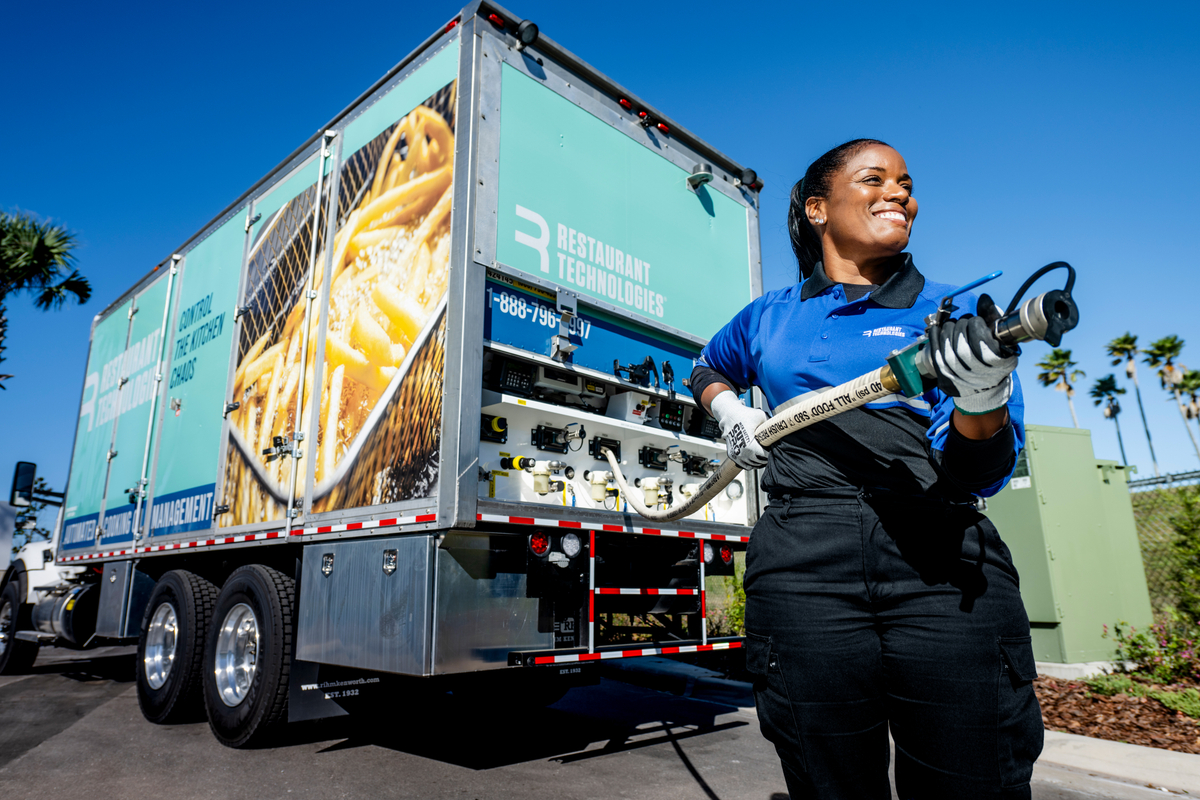
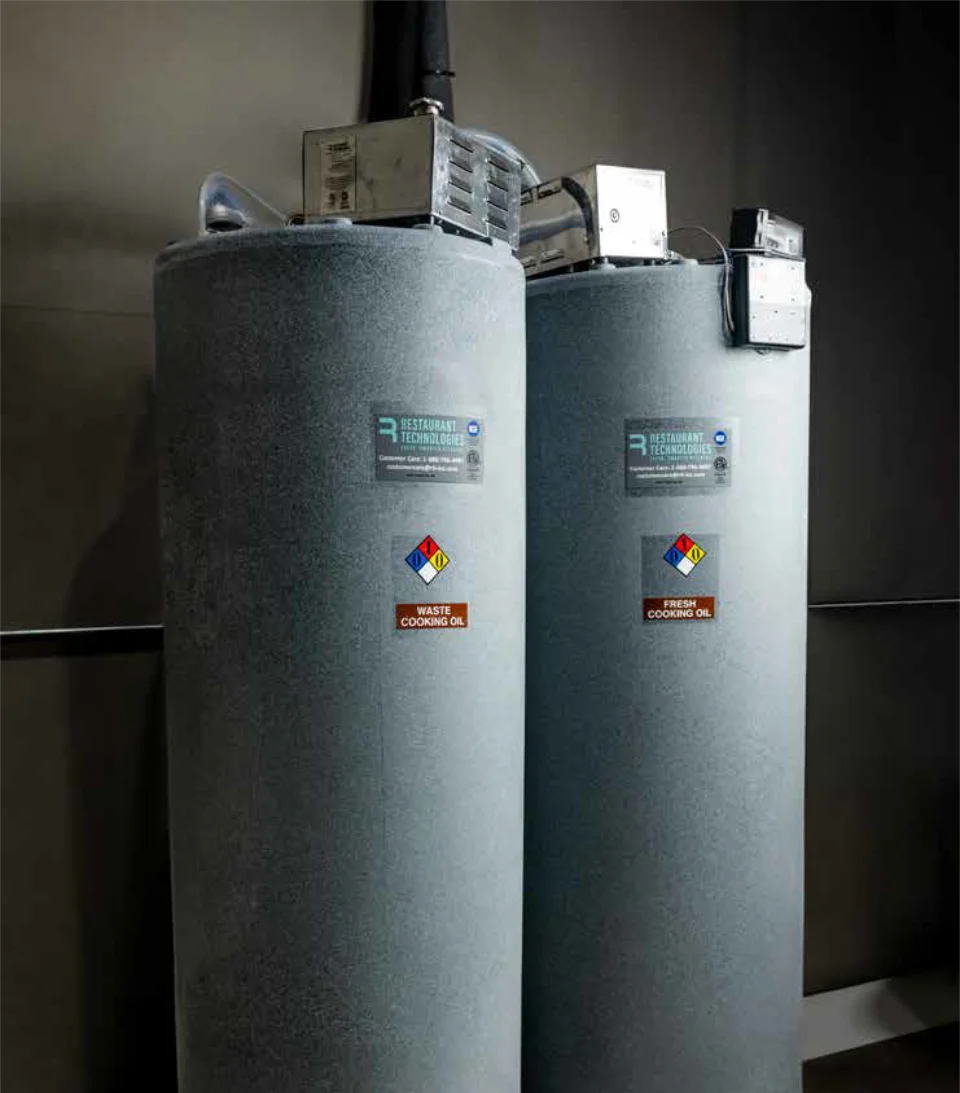
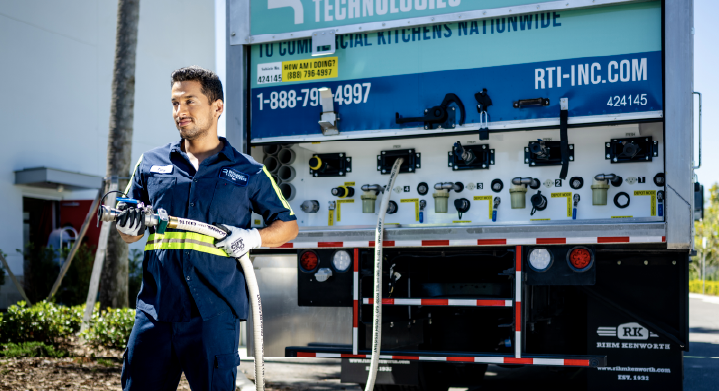
In the back-of-house, kitchen automation addresses some of the hardest jobs in the back-of-house. Solutions like automated cooking oil management eliminate hazardous, time-consuming tasks such as lifting heavy JIBs and managing used cooking oil disposal. Automated systems maintain consistent food quality even when staffing levels fluctuate. New employees require less training when technology handles complex processes.
Understanding how to use technology to improve restaurant margins starts with identifying where labor hours deliver the least return. Automation drives operational efficiency, allowing operators to reallocate staff toward guest-facing roles that directly impact satisfaction.
Data-Driven Restaurants
Modern restaurant technology generates valuable operational data. Smart operators use this information to make better restaurant business decisions about pricing, staffing, and menu development.
Technology enables data-driven decision-making across multiple areas:
- AI-powered analytics reveal which menu items drive profitability and which underperform, allowing operators to adjust offerings based on actual performance rather than assumptions
- Labor analytics connect staffing levels to revenue patterns, helping managers optimize coverage for projected demand and reduce overstaffing during slow periods
- Inventory and waste tracking identify inefficiencies in purchasing and preparation, highlighting opportunities to reduce food costs without compromising food quality
- AI-powered monitoring tools provide real-time visibility across multiple locations, giving restaurant owners access to dashboards that compare performance and identify best practices to replicate
Challenges Introduced by Technology
Embracing technology delivers clear benefits, but adoption creates its own set of operational considerations. The National Restaurant Association’s State of the Restaurant Industry report confirms that operators face persistent cost pressures, uneven traffic, and rising expenses that continue to affect revenue and profitability.4 This makes it essential to balance innovation against practical implementation realities.
Common technology challenges include:
- Managing multiple platforms creates complexity, as restaurants often use separate systems for reservations, point-of-sale, inventory, and scheduling that do not communicate with each other
- Integration requirements demand technical expertise that many operators lack, with disconnected tools creating data silos and duplicate work
- Staff training demands increase with each new system, as team members need time to learn unfamiliar interfaces, and turnover means repeating training cycles frequently
Choosing the right technology means focusing on solutions that simplify rather than complicate daily operations. Closed-loop systems that automate entire workflows deliver greater value than tools that merely digitize manual tasks.
The Lasting Impact of Technology on Restaurants
Technology continues to reshape the restaurant industry at every level. From guest-facing conveniences to back-of-house automation, digital tools have become essential for restaurants seeking efficiency, consistency, and a competitive advantage. The transformation extends beyond front-of-house systems to address some of the most demanding and hazardous tasks in commercial kitchens.
Restaurant Technologies is the leading provider of automated cooking oil management, serving more than 45,000 commercial kitchens nationwide with dependable, technology-driven systems that enhance safety, efficiency, and food quality. With 25+ years of expertise, Restaurant Technologies has transformed one of the hardest, most hazardous jobs in the kitchen into a clean, automated, closed-loop solution.
Sources:
- Ipsos. “Panda Express, Whataburger, and Chick-Fil-A earn top spots in Ipsos’ 2024 QSR/Fast Casual Restaurant Digital Ordering Performance Study”. https://www.ipsos.com/sites/default/files/ct/news/documents/2025-02/Ipsos%20QSR%20Mobile%20Order%20Study%20Press%20Release.pdf
- Qu. “2025 State of Digital Report for Fast Casual & QSR Restaurant Brands”. https://www.qubeyond.com/2025-state-of-digital-restaurant-report/
- Deloitte. “How AI is revolutionizing restaurants”. https://www.deloitte.com/us/en/insights/industry/retail-distribution/ai-in-restaurants.html
- Deloitte. “Frontline Human Capital Trends in Restaurants”. https://www.deloitte.com/content/dam/assets-zone3/us/en/docs/industries/consumer/2025/frontline-human-capital-trends-in-restaurants.pdf
- National Restaurant Association. “State of the Restaurant Industry 2026”. https://restaurant.org/research-and-media/research/research-reports/state-of-the-industry/