Cutting six figures from operating costs without raising prices or sacrificing quality sounds impossible in today’s restaurant environment—but PMTD Restaurants did exactly that. Operating 42 restaurants, including 32 KFC locations, president and co-owner Bill Byrd found significant savings in a place many operators overlook: cooking oil management.
For years, PMTD managed fryer oil the tedious way—ordering 35-pound JIBs through their distributor, manually topping off fryers, and using a wand system to extract used oil. The system worked, but it required constant oversight and hands-on labor. “Ordering correctly, lifting heavy jugs, breaking down cartons, and keeping accurate inventory counts were ongoing frustrations,” Byrd explained.
Each restaurant maintained approximately 300–400 pounds of oil on site at any given time. That meant:
While none of these tasks alone seemed overwhelming, they created operational drag collectively. Rising food costs only intensified Byrd’s focus on efficiency. “We were looking for anything that could save costs while making life easier for our team—and without affecting food quality,” Byrd said. The pressure wasn’t just financial. Labor retention, safety, and manager workload all factor into long-term success, especially in high-volume quick-service operations like KFC.
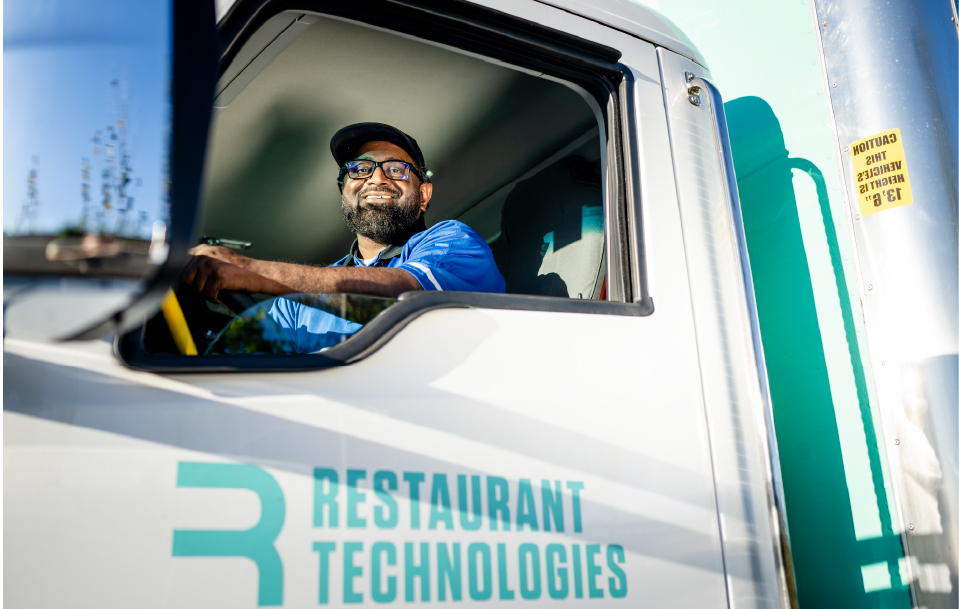
Each restaurant receives up to 1,400 pounds of bulk oil per delivery, fully monitored and tracked through RTI’s T.O.M. Portal dashboard. As the second most expensive line item for KFC, behind chicken, Byrd is seeing financial benefits. “The savings are mostly coming from the raw product cost of oil. Getting oil delivered by truck is far cheaper than handling jugs, cartons, and pallets,” Byrd explained. PMTD reduced oil-related costs by an estimated $4,000–$4,500 per restaurant annually—roughly 0.3% of overall food costs. For a 32-store KFC portfolio, that represents an average of $136,000 in annual savings.
In a margin-sensitive business, it’s rare to see such a meaningful impact on the bottom line without changing menu pricing, product quality, or customer experience. “Very few things today can save money and improve life for your managers. This does both,” Byrd said.
Beyond cost savings, safety improvements have been equally valuable. Handling heavy jugs of oil—especially around hot fryers—carries risk. Strains, spills, burns, and workplace injuries are real concerns in quick-service kitchens. “Not everyone can safely lift a 35-pound jug and pour it into a hot fryer,” Byrd noted. “This system simplifies that and likely reduces risk and discomfort for employees.”
With RTI:
By eliminating heavy lifting and hot oil handling, PMTD reduced workplace hazards and the potential for workers’ compensation claims. The benefit extends beyond compliance—it supports team morale and long-term employee retention.
One of the most impactful shifts for PMTD has been visibility. RTI’s dashboard provides real-time oil usage data at each location. Managers can monitor daily trends, spot anomalies, and ensure fryers are being properly filtered and maintained. “The dashboard allows us to see usage trends in real time. It gives us transparency we didn’t have before,” Byrd said.
This level of oversight:
For store managers and staff, the biggest benefit may be simplicity. “Nothing to order, stock, or rotate. Counting oil now takes seconds instead of minutes,” Byrd said. In an industry facing ongoing labor challenges, reducing unnecessary tasks allows teams to focus on customer service, speed of service, and food execution. Managers consistently report fewer daily headaches and smoother operations overall. “It makes life a heck of a lot easier for our teams,” Byrd said.
For KFC franchisees operating in multiple locations, oil is both a core ingredient and a significant expense. It directly affects food quality, consistency, and profitability. PMTD Restaurants’ experience demonstrates that RTI is not simply a convenience upgrade — it is a strategic operational decision. Byrd’s perspective is direct and practical: “I don’t understand why more franchisees don’t go with RTI. It’s a no-brainer.”
This website uses cookies to enhance user experience and to analyze performance and traffic on our website. We also share information about your use of our site with our social media, advertising, and analytics partners. Learn more in our privacy policy and terms of service.